The short answer
Dallas leaks are found by confirming water loss at the meter, isolating the yard line from the house, and pinpointing the leak with pressure tests, listening equipment and thermal imaging. The local factor is the Blackland Prairie clay under much of the city, which swells when wet and shrinks when dry, stressing slab plumbing and buried service lines.
Leak problems Dallas property owners run into
Much of Dallas sits on the dark, expansive clay of the Blackland Prairie. When it rains, the clay swells and lifts. During long, hot summers it dries, shrinks and cracks. Foundations and the pipes beneath them move with it, which is why slab leaks and foundation repair are such familiar topics here.
Dallas’s housing skews older: roughly 56% was built before 1980, per Census estimates, against 17% since 2000. Original supply lines in homes that age are often near the end of their service life, and partial repipes leave mixed materials behind. Renters occupy about 59% of homes here, which makes owner-tenant communication part of most leak jobs.
The city’s housing ranges from 1920s bungalows to new infill townhomes, and the plumbing does too:
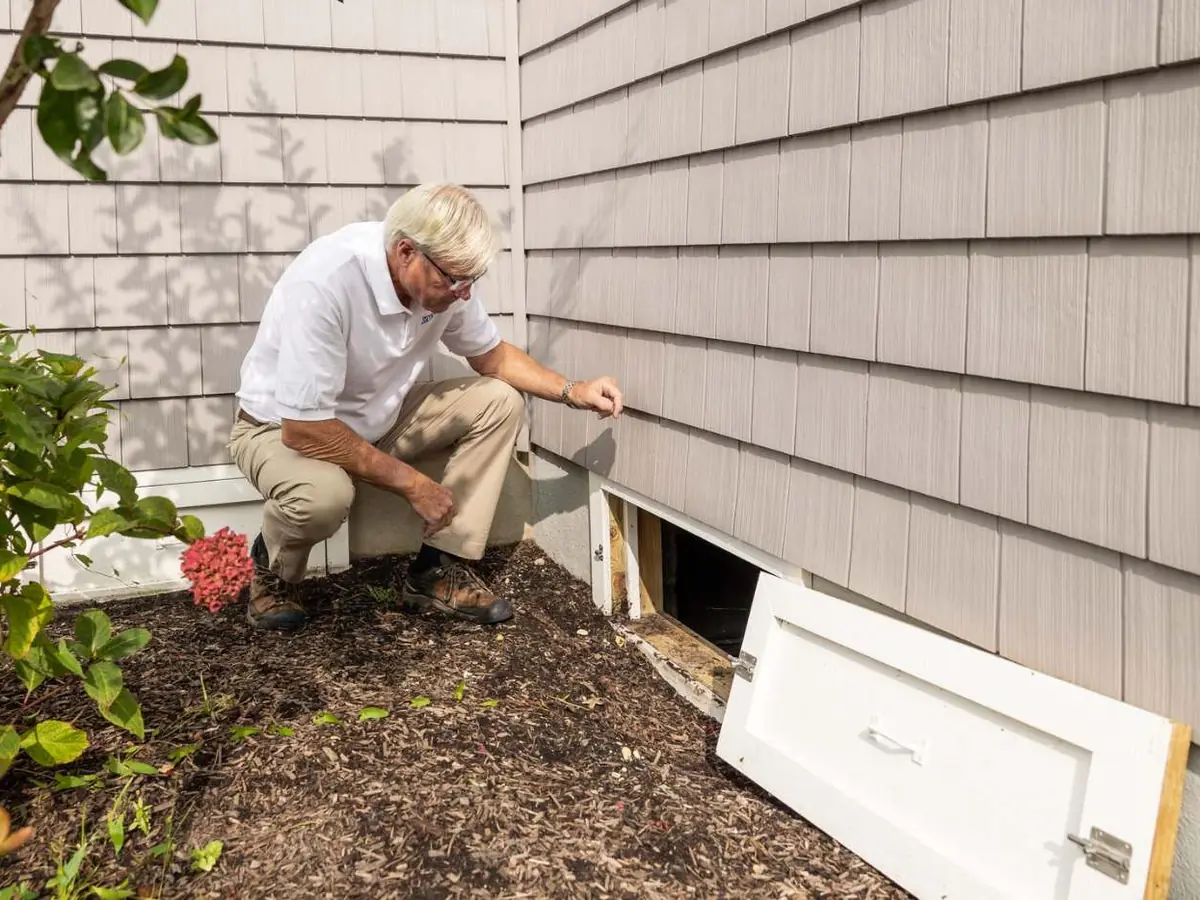
- Pier-and-beam homes in older neighborhoods. Supply lines run in the crawlspace, so a leak usually shows up as water on the ground or a musty smell under the house long before a stain appears inside.
- Postwar slab homes. Copper or galvanized lines under the slab take seasonal movement for decades. Pinhole leaks and failed joints are common finds.
- Townhomes and apartments. Shared walls and stacked units mean a leak can show up a unit away from its source.
- Hard freezes. The February 2021 winter storm burst pipes across the city, and lines in exterior walls, attics and crawlspaces remain the most exposed when temperatures drop into the teens.
Warning signs Dallas owners notice first
- Water pooling at the curb near the meter box after a dry week.
- A musty smell coming through floor registers in a pier-and-beam house.
- The meter’s low-flow indicator keeps turning with every fixture and the irrigation off.
- New cracks in tile or drywall that show up at the same time the bill climbs.
- A doorframe that starts sticking in a season when it never used to.
- Damp carpet tack strip or swollen baseboard with no fixture nearby.
Most of these have other explanations too, which is why the meter test comes first.
Leak detection services for Dallas
Start with the service that matches what you’re seeing. These are the ones most often relevant in Dallas.
- Slab Leak Detection in DallasMost Dallas homes built after World War II sit on slabs over clay that swells and shrinks, which is hard on under-slab lines.
- Crawlspace Leak Detection in DallasOlder neighborhoods such as Oak Cliff, East Dallas and parts of North Dallas still have many pier-and-beam houses with plumbing under the floor.
- Commercial Leak Detection in DallasApartment complexes, offices and retail centers make up a large share of the city’s water accounts.
Something else going on? Emergency leak steps and the general leak guide cover the rest.
What a leak detection visit in Dallas involves
- Confirm the loss. The provider watches the meter with every tap closed and the water heater valve noted.
- Pressure-test sections. Hot, cold and the yard line are tested separately to find which one won’t hold pressure.
- Check the warm spots. On hot-line leaks, a thermal camera often shows the warm trail across tile or concrete.
- Pinpoint acoustically. Listening points are taken across the floor until the sound peaks over the leak.
- Talk through the repair. Breaking out the floor is one option. Rerouting the line overhead often avoids it.
In Dallas, providers often ask whether the house is on a slab or on piers before they arrive, because it changes the equipment they bring and how long the search takes.
Want a professional to look at it? Call to request leak detection help in Dallas and talk through what you're seeing.
Call 1-866-297-0573Coverage in and around Dallas
Coverage is confirmed by address when you call. Providers serving Dallas typically also work in nearby communities, including:
- Highland Park
- University Park
- Irving
- Garland
- Mesquite
- Richardson
- Grand Prairie
- Duncanville
Dallas Water Utilities bills most addresses inside the city. The meter and the line on the street side are the utility’s responsibility. Leaks from the meter to the house are usually the owner’s.
Dallas ZIP codes
Street addresses in Dallas use these ZIP codes. ZIP 75275 and 75277 and 75283 and 75284 and 75285 and 75301 and 75303 and 75312 and 75320 and 75326 and 75358 and 75368 and 75373 and 75389 and 75390 and 75391 and 75392 and 75393 and 75394 and 75395 and 75397 are unique ZIPs assigned to a single organization rather than to neighborhoods.
- 75201
- 75202
- 75203
- 75204
- 75205
- 75206
- 75207
- 75208
- 75209
- 75210
- 75211
- 75212
- 75214
- 75215
- 75216
- 75217
- 75218
- 75219
- 75220
- 75223
- 75224
- 75225
- 75226
- 75227
- 75228
- 75229
- 75230
- 75231
- 75232
- 75233
- 75234
- 75235
- 75236
- 75237
- 75238
- 75240
- 75241
- 75242
- 75243
- 75244
- 75246
- 75247
- 75248
- 75249
- 75251
- 75252
- 75253
- 75254
- 75260
- 75270
- 75287
- 75398
PO Box ZIP codes 75221, 75222, 75250, 75261, 75262, 75263, 75264, 75265, 75266, 75267, 75313, 75315, 75336, 75339, 75342, 75354, 75355, 75356, 75357, 75359, 75360, 75367, 75370, 75371, 75372, 75374, 75376, 75378, 75379, 75380, 75381 and 75382 also belong to Dallas but have no street addresses, so they aren’t service locations on their own.
More leak detection pages near Dallas
If the property is just outside Dallas, one of these pages may fit better:
- Water leak detection in University Park, TXDallas County, one of the Park Cities around SMU. Older, high-value homes, many renovated or rebuilt.
- Water leak detection in Irving, TXDallas County, home of Las Colinas. A renter-majority city with large apartment and office stock.
- Water leak detection in Garland, TXDallas County, west of Lake Ray Hubbard. Mostly older slab homes on Blackland clay.
- Water leak detection in Richardson, TXDallas and Collin counties. 1950s–1970s ranch homes, the Telecom Corridor and UT Dallas.
- Water leak detection in Mesquite, TXDallas and Kaufman counties, east of Dallas. Slab homes on Blackland clay along the I-30 and I-635 corridors.
- All Dallas–Fort Worth Metroplex citiesEvery city in this region with its own page.
Dallas leak detection FAQ
Is my Dallas house more likely to have a slab leak or a crawlspace leak?
It depends on when and where it was built. Many homes from before the 1950s in older neighborhoods are pier-and-beam, while most postwar and newer homes are on slabs. If there’s a crawl hatch or vents around the foundation, you likely have pier-and-beam.
My foundation was just leveled. Should the plumbing be tested?
Many Dallas homeowners schedule a pressure test after foundation work, because lifting the slab can stress the lines underneath. Ask your foundation contractor whether a plumbing test is part of their process.
Who do I call about water bubbling up near the street?
If the water seems to come from the utility side of the meter or the street, report it to Dallas Water Utilities. If your meter moves with everything off, the leak may be on your side.
Can a leak be found in a high-rise or condo?
Yes. Providers who handle multifamily and commercial buildings use moisture mapping, thermal imaging and isolation of risers. Your HOA or building management may need to be involved.
Sources for the local details on this page
ZIP codes and housing-age figures come from the public sources above. Soil, climate and housing notes reflect widely published regional information. Utility policies change, so confirm anything about billing or responsibility with your own water provider.