The short answer
Ceiling and wall leak detection traces water damage back to its source. A provider first works out whether the water comes from a pressurized supply line, a drain, a fixture seal, an attic appliance or the roof, then uses moisture mapping, thermal imaging and fixture-by-fixture testing to pinpoint it, opening only a small inspection hole if one is needed.
What wall and ceiling detection covers
Water inside a building can come from several places that look alike from below:
- Supply lines in walls and ceilings, which leak all the time.
- Drain and waste lines, which only leak when a fixture is used.
- Fixture seals, such as a failed shower pan, tub overflow, toilet wax ring or tile grout.
- Attic appliances. In many Texas homes the air handler and sometimes the water heater sit in the attic. Clogged condensate lines and overflowing drain pans are a common cause of ceiling stains.
- Roof and flashing, which leak during rain.
- Condensation on cold pipes or ducts in humid weather.
Sorting these out is the first job, because each one is fixed differently.
Ceiling leaks
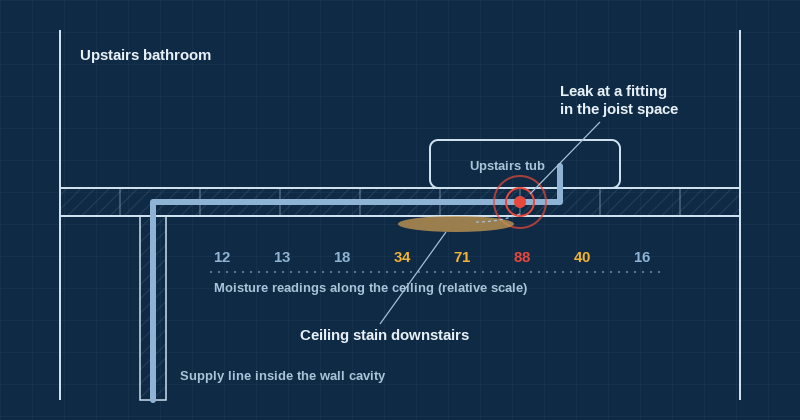
Ceiling stains below a bathroom usually trace to the tub, shower, toilet or the supply lines feeding them. Stains elsewhere on the top floor point toward the attic: an AC condensate pan, a water heater, a supply line to an outdoor spigot, or the roof. Water often runs along a joist or drywall seam before it soaks through, so the stain can be a few feet from the leak.
Wall leaks
Damp drywall, bubbling paint or a swollen baseboard often sits below a supply line, a shower valve or a fixture connection on the other side of the wall. Exterior walls add another possibility: water getting in through windows, siding or a hose bib connection.
Signs of a hidden wall or ceiling leak
- A stain that grows, darkens or returns after it dries.
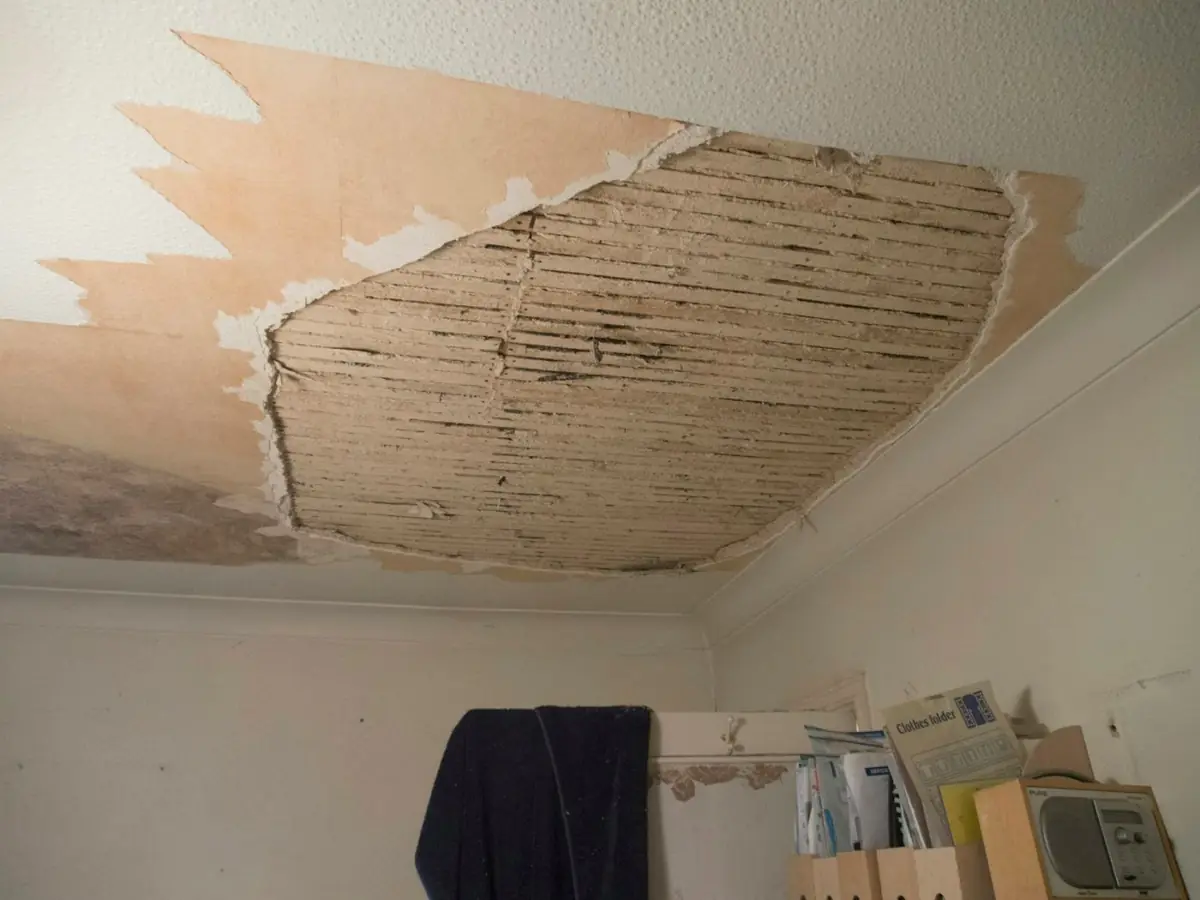
- Sagging or soft spots in the ceiling.
- Bubbling or peeling paint, or wallpaper lifting.
- Swollen baseboards or trim.
- A musty smell in one room or closet.
- Drips from light fixtures or vents.
- Damage that gets worse after showers, laundry or rain, which helps identify the source.
Common causes of wall and ceiling leaks
- Pinholes or failed fittings on supply lines.
- Loose or worn shower valves and supply connections.
- Failed shower pans and cracked grout.
- Toilet wax rings and supply hoses.
- Clogged AC condensate lines and rusted drain pans.
- Water heater leaks or relief valve discharge in the attic.
- Lines split by freezing in exterior walls or attics.
- Roof, flashing or window leaks during storms.
Detection methods
- Moisture mapping. Readings taken in a grid across the drywall and ceiling show where moisture is highest and which way it spread.
- Thermal imaging. Wet areas and hot water lines show up as temperature differences on the surface.
- Fixture isolation. Running one fixture at a time, such as only the shower or only the tub, and watching for new moisture.
- Meter and pressure tests. If the meter moves with everything off, a supply line is involved. If not, attention turns to drains, fixtures, the attic or the roof.
- Flood testing. A shower pan can be tested by plugging the drain and holding water in the base.
- Borescope inspection. A small camera through a small hole lets the provider look inside the cavity before any larger opening.
What happens during an inspection
The provider will ask when the stain appeared, whether it changes with showers, laundry or rain, and what’s above or behind it. Expect them to check the attic if the damage is on the top floor. Clear access to the rooms on both sides of the wall, the bathroom above a ceiling stain, and the attic hatch.
What happens after the source is found
Depending on the source, the fix may be a plumber repairing a line or fitting, a fixture being reset or resealed, an HVAC technician clearing a condensate line, or a roofer repairing flashing. Wet drywall and insulation usually need to be dried or replaced, and any sign of mold should be dealt with before walls are closed up.
Why early detection matters
Drywall, insulation and wood framing hold water. The longer they stay wet, the more likely mold becomes and the more material needs to be replaced. A ceiling that’s holding water can also sag and fall. Finding the source early keeps the opening small and the repair simple.
What it may cost
Cost depends on how many possible sources need to be ruled out, whether attic or roof access is needed, whether an inspection hole is required, and after-hours scheduling. Repair is separate and depends on what’s found. Each provider sets its own prices.
When to call
Call right away if the ceiling is sagging, water is dripping through light fixtures, or water is near electrical outlets. Shut off the water first if a supply line is the likely source. Book a visit if a stain keeps returning or drywall stays damp.
Frequently asked questions
How do I know if a ceiling stain is from the roof or a pipe?
If it appears or grows only during rain, the roof is more likely. If it changes with showers or laundry, look at drains and fixtures. If the meter moves with everything off, a supply line is likely involved.
Can a leak be found without cutting into drywall?
Often, yes. Moisture mapping and thermal imaging work through the surface. A small hole for a camera is sometimes needed to confirm.
Why is the stain in a different place from the bathroom?
Water follows joists, pipes and drywall seams before soaking through, so it can show up several feet away from the leak.
My AC is in the attic. Could that be the leak?
It’s a common cause. A clogged condensate line or rusted drain pan can overflow onto the ceiling, especially in summer.
Is a small stain worth checking?
If it grows or returns, yes. Small stains can mean a slow, steady leak above.
Will I need to replace the drywall?
Often only the damaged section. Drywall that stays wet or shows mold usually needs to be cut out and replaced.
Local ceiling and wall leak detection guides
- Ceiling and Wall Leak Detection in Victoria, TXRoof, attic AC or plumbing? Sorting out ceiling stains after Gulf storms.
Where ceiling and wall leak detection comes up most in Texas
These city pages explain why ceiling and wall leak detection matters locally, from soil and housing age to how water is supplied. Open a region to see its cities, or browse every service area.
Dallas–Fort Worth Metroplex (6)
- Irving, TXIn stacked apartments and townhomes, a leak usually first appears as a stain in the unit below or next door.
- University Park, TXTwo-story homes, large renovations and upstairs baths make ceiling and wall leaks a frequent call.
- Lewisville, TXMany residents live in apartments, where leaks show up as stains in neighboring units.
- Denton, TXStudent apartments, duplexes and older rentals often first show leaks as stains or damp walls.
- Bedford, TXApartments and townhomes make up a big share of housing, and leaks often surface in the unit next door.
- Euless, TXMore than half of Euless households rent, and apartment leaks often surface in neighboring units.
Greater Houston and the Upper Gulf Coast (9)
- Houston, TXWith more than half of households renting, many leaks first appear as stains in apartments, townhomes and condos.
- Pearland, TXTwo-story homes are common, and upstairs bathroom leaks show up in downstairs ceilings.
- Dickinson, TXHomes rebuilt after flooding sometimes have new plumbing tied into old, with leaks showing in walls.
- League City, TXTwo-story homes are common, and upstairs leaks appear in downstairs ceilings.
- La Porte, TXStorm-damaged and repaired homes sometimes show leaks in walls and ceilings.
- Sugar Land, TXTwo-story homes are common, and upstairs bath leaks show up in downstairs ceilings.
- Galveston, TXHistoric homes, renovations and storm repairs make wall and ceiling leaks common.
- Friendswood, TXHomes repaired after flooding sometimes develop leaks where new plumbing meets old.
- Katy, TXTwo-story homes are typical, and upstairs bath leaks appear in downstairs ceilings.
South Texas Gulf Coast (1)
- Portland, TXHomes repaired after Hurricane Harvey sometimes leak where new and old plumbing meet.
Central Texas and the Brazos Valley (4)
- Waco, TXWith more than half of households renting, leaks in apartments and duplexes often show up as stains first.
- Killeen, TXDuplexes, fourplexes and apartments make up a big share of housing, and leaks cross unit lines.
- College Station, TXMost residents rent, many in apartments, duplexes and fourplexes where leaks spread between units.
- Huntsville, TXAbout seven in ten households rent, many in apartments and duplexes where leaks cross unit lines.
Austin and the I-35 Corridor (2)
- Austin, TXMore than half of households rent, and stacked condos and apartments see leaks pass between units.
- San Marcos, TXAbout seven in ten households rent, many in apartments and duplexes where leaks cross unit lines.
San Antonio and the Hill Country (3)
- Cibolo, TXTwo-story floor plans are the norm in Cibolo’s newer subdivisions, so a leak upstairs often first appears as a stain on the living room ceiling.
- Universal City, TXApartments and duplexes serving base personnel see leaks that cross unit lines.
- Kerrville, TXHomes repaired after flooding can develop leaks where new plumbing meets old.
East Texas (1)
- Nacogdoches, TXWith most households renting, leaks in apartments and duplexes near SFA often show up as stains first.
Rio Grande Valley and the Border (1)
- Edinburg, TXStudent apartments and duplexes near UTRGV often show leaks as stains or damp walls.
West Texas and the Panhandle (1)
- Lubbock, TXWith nearly half of households renting, many near Texas Tech, leaks often appear as stains first.