The short answer
Crawlspace leak detection finds leaks in the water lines that run beneath pier-and-beam homes. A provider confirms water loss at the meter, inspects the under-floor plumbing through the access hatch, uses pressure tests and moisture readings to narrow the source, and separates plumbing leaks from rainwater, groundwater and condensation.
What crawlspace leak detection covers
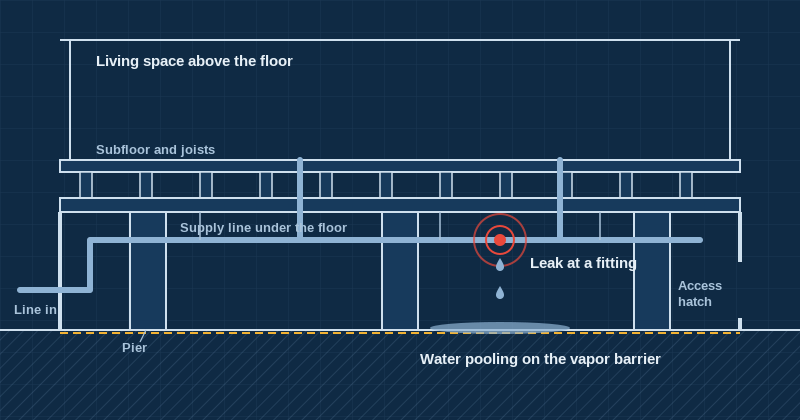
Pier-and-beam houses stand on piers above a crawlspace, with supply and drain lines hanging below the floor joists. Many Texas homes built before about the 1960s use this kind of foundation, and it’s still used today on some sites.
Under-floor plumbing is easier to reach than pipes in a slab, but it’s also out of sight. A leak can drip onto the soil or vapor barrier for a long time before it shows inside the house. The crawlspace is also exposed to cold air, which makes the lines more vulnerable in a freeze.
Signs of a crawlspace leak
- A musty or damp smell in the house, especially near floor vents.
- Floors that feel soft, spongy or uneven in one area.
- Buckling hardwood or lifting vinyl.
- Standing water or mud under the house when it hasn’t rained.
- Higher humidity indoors, condensation on windows or mold on baseboards.
- More insects or pests drawn by the moisture.
- The meter moving with everything off.
- A bill that rose after a hard freeze.
Common causes of crawlspace leaks
- Freezing. Uninsulated lines in a ventilated crawlspace can split in hard freezes. Many leaks show up only after the thaw.
- Aging pipe. Older homes may still have galvanized steel or early copper under the floor.
- Fittings and connections. Joints, valves and supply lines to fixtures are common failure points.
- Movement. Settling piers and shifting framing can strain lines and fittings.
- Pests. Rodents occasionally chew plastic lines.
- Drain leaks. Leaks from tub, shower and sink drains also land in the crawlspace, but only when fixtures are used.
Detection methods
- Meter check. Confirms whether a pressurized line is leaking.
- Visual inspection. Following the lines from the access point, looking for drips, wet insulation, staining and corrosion.
- Moisture readings. Checking framing, subfloor and soil to see where the water is concentrated.
- Pressure isolation. Testing hot, cold and branch lines separately.
- Acoustic listening directly on pipes where access is limited.
- Water source checks. Some providers test standing water for chlorine. Treated city water usually carries a disinfectant, while rain and groundwater generally don’t.
What happens during an inspection
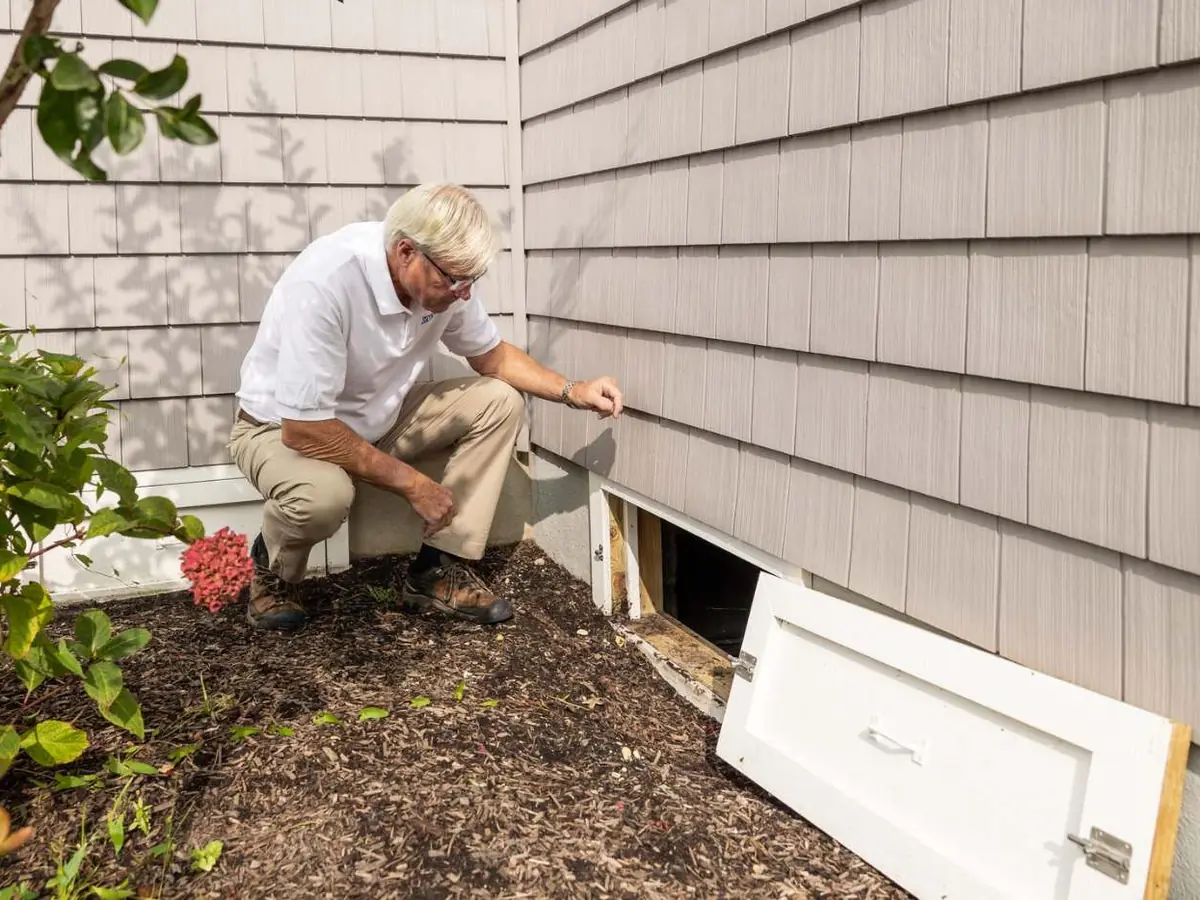
The provider will need the crawlspace access hatch cleared, plus access to the meter and water heater. Crawlspaces can hold standing water, live wiring, pests and sharp debris, so leave the under-house work to the provider. Expect them to look at insulation, vapor barrier, drainage and venting as well as the plumbing, since these all affect moisture.
What happens after the leak is found
Under-floor leaks are often simpler to repair than slab leaks because the pipe is reachable. Wet insulation should be removed and replaced, and soaked framing given time to dry. If freezing caused the leak, ask about insulating exposed lines. If moisture comes from drainage rather than plumbing, that’s a job for a drainage or foundation professional.
Why early detection matters
Constant moisture under a house can rot sill plates, joists and subfloor, attract termites and feed mold that moves into the living space. Water pooling around piers can also soften the soil they rest on.
What it may cost
Cost depends on the size and height of the crawlspace, how easy it is to move around in, whether there’s standing water, and how many lines need testing. Each provider sets its own prices.
When to call
Call right away if water is pouring under the house or floors are sagging. Book a visit if you notice persistent odors, soft spots, standing water without rain, or a meter that moves with everything off. Check for leaks after any hard freeze.
Frequently asked questions
How do I know if water under my house is from a leak or from rain?
A meter test shows whether a supply line is leaking. Water that appears without rain, or keeps coming after the ground dries, points to plumbing. Some providers test standing water for chlorine to confirm it’s treated city water.
Can I look in the crawlspace myself?
You can look in from the hatch with a flashlight. Going in is best left to a provider because of standing water, wiring and pests.
Are crawlspace leaks common after freezes?
Yes. Lines under a ventilated floor are exposed to outside air. Check the meter after any hard freeze.
Is a crawlspace leak easier to fix than a slab leak?
Usually, because the pipe can be reached without breaking concrete. Access height and obstructions still affect the work.
Will the floor need to come up?
Rarely. Most repairs are made from below through the crawlspace.
What if the moisture isn’t from plumbing?
Drainage, grading, gutters and venting problems can all put water under a house. The provider can tell you whether plumbing is the source.
Local crawlspace leak detection guides
- Crawlspace Leak Detection in Longview, TXUnder-floor plumbing, freeze damage and what to check after a cold snap.
- Crawlspace Leak Detection in Lufkin, TXTelling plumbing leaks apart from humidity, condensation and drainage under the house.
Where crawlspace leak detection comes up most in Texas
These city pages explain why crawlspace leak detection matters locally, from soil and housing age to how water is supplied. Open a region to see its cities, or browse every service area.
Dallas–Fort Worth Metroplex (10)
- Dallas, TXOlder neighborhoods such as Oak Cliff, East Dallas and parts of North Dallas still have many pier-and-beam houses with plumbing under the floor.
- Lancaster, TXSome older homes near the historic town square are pier-and-beam, with plumbing beneath the floor.
- University Park, TXMany older University Park homes are pier-and-beam, with supply and drain lines in the crawlspace.
- McKinney, TXHistoric neighborhoods around the downtown square include many older pier-and-beam houses.
- Denton, TXHistoric neighborhoods near the square and the universities include many older pier-and-beam houses.
- Greenville, TXOlder neighborhoods include pier-and-beam houses with plumbing under the floor.
- Fort Worth, TXHistoric neighborhoods such as Fairmount, Arlington Heights and the Near Southside have many pier-and-beam homes.
- Grapevine, TXOlder homes near historic Main Street include pier-and-beam houses with plumbing under the floor.
- Cleburne, TXOlder neighborhoods near downtown include pier-and-beam houses with crawlspace plumbing.
- Waxahachie, TXWaxahachie’s historic Victorian and early-1900s homes are often pier-and-beam.
Greater Houston and the Upper Gulf Coast (5)
- Houston, TXOlder neighborhoods such as the Heights, Montrose and parts of the East End have many pier-and-beam bungalows.
- Channelview, TXOlder homes and manufactured housing in the area often have plumbing under raised floors.
- Rosenberg, TXOlder homes near the historic downtown include pier-and-beam houses with plumbing under the floor.
- Galveston, TXMany Galveston homes are raised on piers, with plumbing exposed beneath the floor.
- Angleton, TXSome older homes and manufactured housing have plumbing under raised floors.
Southeast Texas (1)
- Beaumont, TXOlder neighborhoods include pier-and-beam homes, where wet ground under the house hides leaks.
South Texas Gulf Coast (1)
- Kingsville, TXOlder neighborhoods include pier-and-beam homes with plumbing under the floor.
Central Texas and the Brazos Valley (4)
- Waco, TXOlder neighborhoods near downtown and Baylor include many pier-and-beam homes.
- Belton, TXHistoric homes near the courthouse and the university include pier-and-beam houses.
- Huntsville, TXOlder homes on wooded, hilly lots often sit on piers with plumbing underneath.
- Corsicana, TXOlder neighborhoods include pier-and-beam homes from the city’s oil-boom era.
Austin and the I-35 Corridor (2)
- Austin, TXCentral neighborhoods such as Hyde Park, Travis Heights and Clarksville have many older pier-and-beam bungalows.
- Georgetown, TXHistoric homes around the courthouse square include pier-and-beam houses with plumbing underneath.
San Antonio and the Hill Country (2)
- San Antonio, TXHistoric neighborhoods such as King William, Monte Vista and Tobin Hill have many older pier-and-beam homes.
- Seguin, TXHistoric homes near downtown include pier-and-beam houses.
East Texas (3)
- Tyler, TXOlder neighborhoods such as the Azalea District have many pier-and-beam homes with plumbing beneath the floor.
- Nacogdoches, TXMany older homes in one of Texas’s oldest towns sit on piers over red clay.
- Marshall, TXA large share of Marshall’s older homes are pier-and-beam, with plumbing over often-damp soil.
North Texas and Texoma (2)
- Denison, TXHistoric neighborhoods from the railroad era include many pier-and-beam houses.
- Paris, TXOlder neighborhoods include pier-and-beam homes with plumbing under the floor.
West Texas and the Panhandle (1)
- Amarillo, TXSome older homes have crawlspaces or basements, more common here than in most of Texas.