The short answer
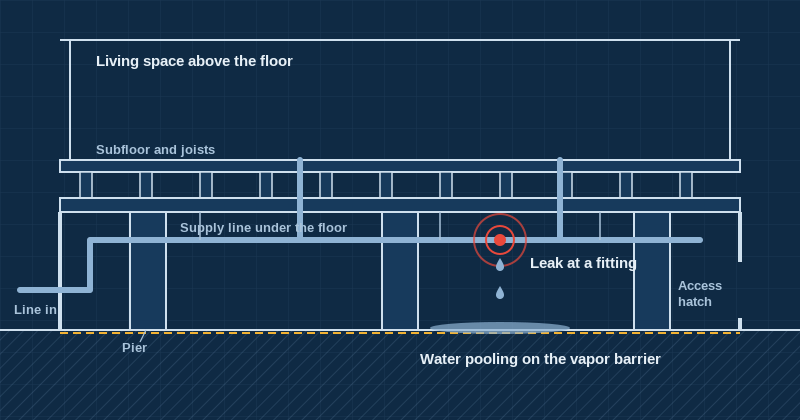
Crawlspace leak detection in Longview finds leaks in the supply lines under pier-and-beam floors. A provider confirms the leak at the meter, inspects the under-floor plumbing from the access hatch, pressure-tests sections and uses moisture readings and direct listening to pinpoint it. After a hard freeze, under-floor lines are among the first places to check.
Signs of a crawlspace leak in Longview
- A musty smell from floor vents or closets on exterior walls.
- A soft, springy or sagging spot in the floor.
- Hardwood cupping or vinyl lifting in one area.
- Mud or standing water under the house when it hasn’t rained.
- Condensation on windows or higher indoor humidity than usual.
- The meter moving with everything off, especially after a freeze.
- Water dripping or running sounds from under the floor.
What’s different about crawlspace leaks in Longview
Older housing stock. Pier-and-beam foundations were common in Texas homes built before about the 1960s, and Longview has established neighborhoods with homes from that era. Under-floor plumbing in those homes may still include galvanized steel or early copper, along with decades of repairs and additions.
Exposure to cold. A ventilated crawlspace is open to outside air. In an ordinary East Texas winter that isn’t a problem, but in a hard freeze, uninsulated lines under the floor can split. During Winter Storm Uri in February 2021, Texans filed more than 450,000 insurance claims and much of the damage came from broken pipes, according to the Texas Department of Insurance. Freeze leaks often start only once the ice thaws, sometimes days later.
Soil that hides small leaks. East Texas soils are typically sandy or loamy at the surface with clay deeper down. Water dripping into a crawlspace can soak in rather than pool, so a slow leak may leave only damp soil and a smell for a long time.
Common causes
- Lines split by freezing, especially near foundation vents and exterior walls.
- Corroded galvanized steel and older copper.
- Failed fittings, valves and old repair couplings.
- Lines pulled or bent as piers settle and framing shifts.
- Supply lines to tubs, toilets and sinks that run through the floor.
- Drain leaks, which show up only when fixtures are used.
How crawlspace leaks are found
- Meter check to confirm a supply leak, as opposed to drain or groundwater.
- Visual inspection along the lines from the hatch, looking for drips, wet insulation, frost splits and corrosion.
- Pressure isolation of hot, cold and branch lines.
- Moisture readings on joists, subfloor and soil to show where water is concentrated.
- Direct listening on the pipe where the crawlspace is too tight to see the whole run.
- Water checks. Some providers test standing water for chlorine. Treated city water usually carries it; rain and groundwater generally don’t.
What the inspection involves
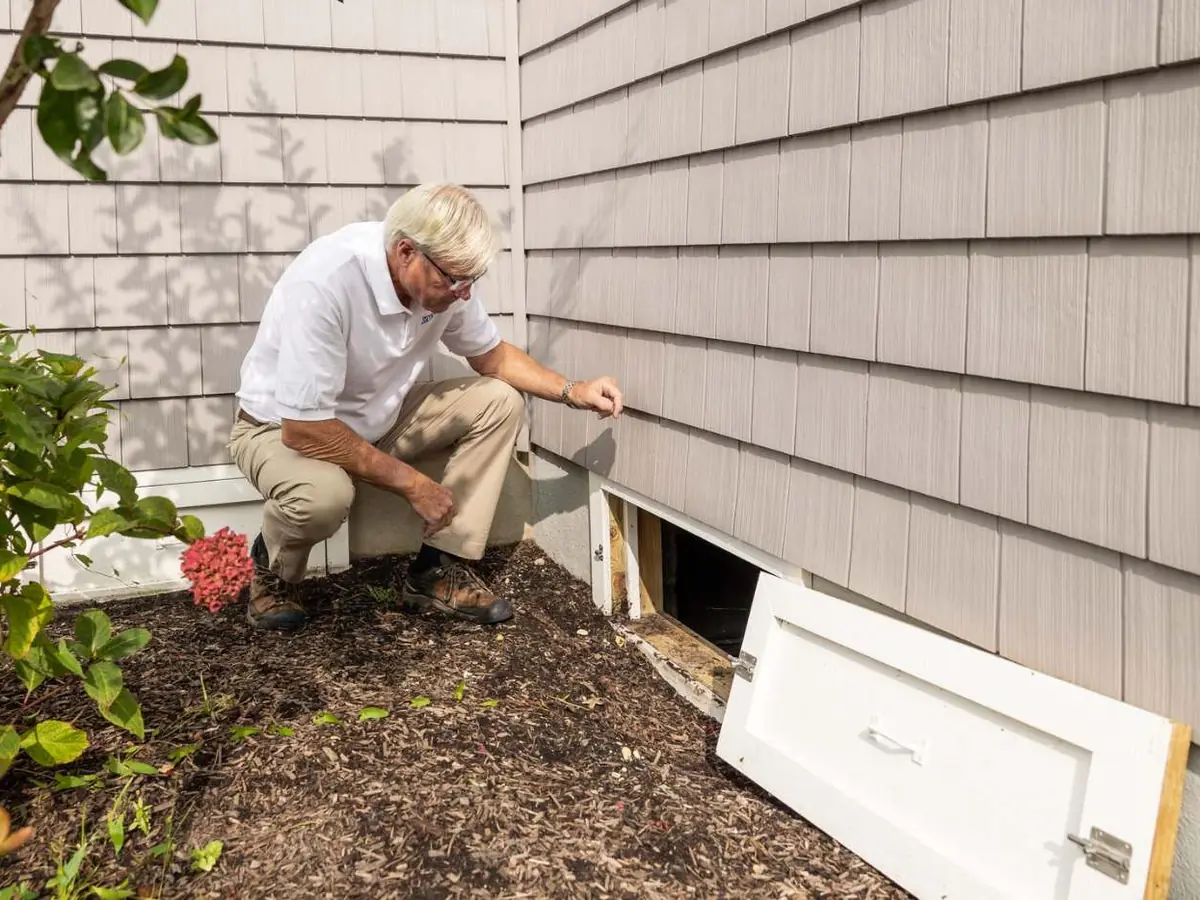
Clear the path to the crawlspace hatch and let the provider know about crawlspace height, standing water or pets that use the space. Leave the under-house work to them. Crawlspaces can hold live wiring, pests, sharp debris and water. Expect them to check insulation, vapor barrier and vents too, because those affect both moisture and freeze risk.
What happens after detection
Most under-floor leaks are repaired from below without disturbing the floor. Wet insulation should come out and be replaced once the area dries. If the leak was freeze damage, ask about insulating exposed lines and closing or covering vents during hard freezes. If the line is old galvanized steel with several problems, ask whether replacing that section makes more sense than another repair.
When to call
Call right away if water is pouring under the house, the floor is sagging, or the meter is spinning after a thaw. Shut off the main first. Book a regular visit for persistent odors, soft spots or damp soil under the house.
Frequently asked questions
When should I check for leaks after a freeze?
As temperatures rise above freezing and again over the next day or two. Watch the meter with everything off. Movement means a line likely split.
Can I prevent crawlspace freeze damage?
Insulating exposed lines, sealing gaps and covering foundation vents during hard freezes all reduce the risk. A provider or plumber can point out the most exposed runs.
Is water under my house always a plumbing leak?
No. Rain, poor drainage and gutters can all put water under a house. A meter test and a chlorine check help tell them apart.
Will the floor need to come up?
Rarely. Repairs are usually made from the crawlspace.
Should I replace old galvanized pipe under the floor?
If it has leaked more than once or shows heavy corrosion, replacement is often worth discussing. One leak on otherwise sound pipe may just need a repair.
More leak detection in Longview
- Water leak detection in LongviewThe Longview overview: local leak patterns, coverage and ZIP codes.
- Slab Leak Detection in LongviewLeaks that drain away unseen, and how slab leaks are pinpointed in East Texas soil.
- How crawlspace leak detection worksThe full statewide guide: methods, costs and what to expect anywhere in Texas.
- Slab Leak DetectionLocating supply-line leaks under a concrete foundation before anyone breaks the floor.
- Water Service Line Leak DetectionFinding leaks on the buried pipe between the water meter and the house.
Sources for the local details on this page
- Longview, TX ZIP code list and ZIP types
- ZIP 75605 details including the Greggton alias (zip-codes.com)
- ZIP codes in the Longview, TX metro area
- USDA NRCS ecological site, Western Coastal Plain (East Texas soils)
- Ground-water resources of Gregg County, USGS Water-Supply Paper 1079-B
- Winter Storm Uri insurance losses and burst pipes (Texas Department of Insurance)
ZIP codes, nearby communities and soil notes come from the public sources above. Utility policies change, so confirm anything about billing or responsibility with your own water provider.