The short answer
Houston leaks are found by confirming loss at the meter, isolating the yard line, and pinpointing with pressure tests, acoustic listening, thermal imaging and moisture mapping. Expansive Gulf Coast clay, humidity, a large multifamily stock and storm and freeze history are the local factors.
Leak problems Houston property owners run into
Houston sits on the Gulf Coast plain, where the clay soils are expansive and the ground is nearly flat. Long dry spells shrink the clay and drop foundations. Tropical storms and heavy rains swell it again. Slabs and the pipes beneath them move every year.
About 55% of Houston’s homes predate 1980, according to Census estimates. In houses that age, corroded galvanized lines, old shutoff valves and repairs layered on repairs are a big share of what leak detection finds. Renters occupy about 57% of homes here, which makes owner-tenant communication part of most leak jobs.
The city’s housing and climate add their own twists:
- Humidity. Leaks inside walls feed mold quickly, so a small drip can become a remediation job in weeks.
- Townhomes and apartments. Three-story townhomes and large complexes mean leaks often appear one floor or one unit away from the source.
- Pier-and-beam bungalows. In older inner-loop neighborhoods, plumbing runs under raised floors where leaks can pool unseen.
- Storms and freezes. Hurricane Harvey’s flooding in 2017 and the February 2021 freeze both damaged plumbing across the city, and some of that damage surfaces years later.
How a hidden leak shows up in Houston
- Baseboards or the bottom of door casings swelling and staying soft.
- A ceiling stain on the first floor of a three-story townhome.
- A musty smell that lingers after the air conditioning has been running.
- Warm spots on a tile or concrete floor.
- A musty smell in a closet that shares a wall with a bathroom.
- A wet patch in the yard that stays wet for days after the last rain.
Pair any of these with a meter check before assuming the worst.
Leak detection services for Houston
Not every service matters equally everywhere. For Houston, these three come up most, for the local reasons noted.
- Slab Leak Detection in HoustonMost Houston homes are slabs on Gulf Coast clay that shrinks in drought and swells after storms, a steady strain on under-slab lines.
- Ceiling and Wall Leak Detection in HoustonWith more than half of households renting, many leaks first appear as stains in apartments, townhomes and condos.
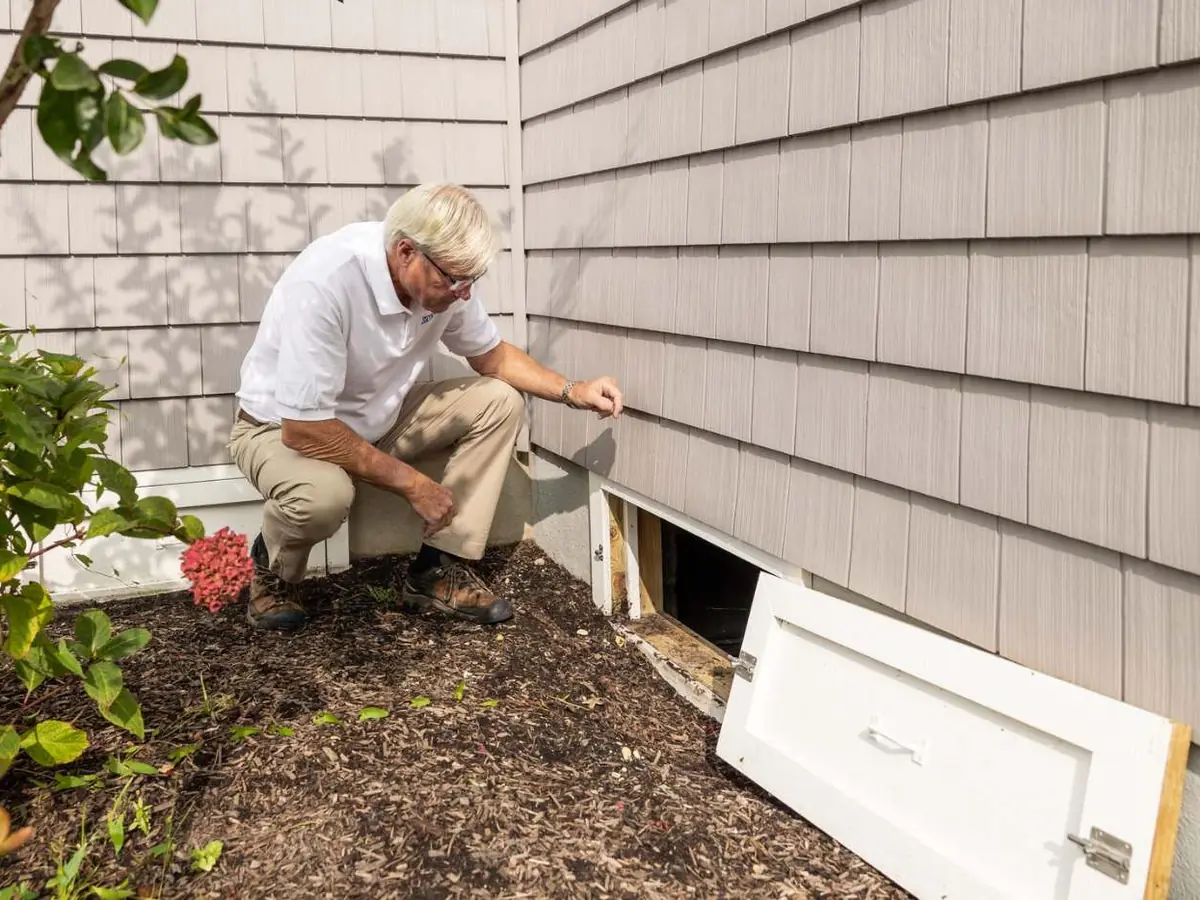
- Crawlspace Leak Detection in HoustonOlder neighborhoods such as the Heights, Montrose and parts of the East End have many pier-and-beam bungalows.
Something else going on? Emergency leak steps and the general leak guide cover the rest.
How a provider finds the leak in Houston
- Meter check. With every fixture off, the low-flow indicator shows whether water is being lost at all.
- Separate the service line. Closing the house shutoff tells you whether the loss is under the house or in the yard.
- Split hot from cold. Isolating the water heater shows which side of the system is leaking under the slab.
- Listen and scan. A ground microphone on the floor, thermal imaging for hot lines and pressure readings narrow the spot.
- Mark and plan. The leak is marked on the floor, and you get repair options: a spot repair through the slab, a reroute through walls or attic, or a repipe.
In Houston, providers often ask about the building type first, because a slab home, a raised bungalow and a third-floor condo each call for a different starting point.
Want a professional to look at it? Call to request leak detection help in Houston and talk through what you're seeing.
Call 1-866-297-0573Areas served around Houston
Provider availability for Houston addresses is confirmed when you call. Houston Public Works bills most addresses inside the city. Many neighborhoods outside city limits are served by municipal utility districts (MUDs), whose name appears on the water bill.
Nearby communities include:
- Bellaire
- West University Place
- Pasadena
- Spring
- Katy
- Sugar Land
- Pearland
Houston ZIP codes
These ZIP codes are used for Houston street addresses. ZIP 77204 and 77209 and 77212 and 77216 and 77297 and 77299 are unique ZIPs assigned to a single organization rather than to neighborhoods.
- 77002
- 77003
- 77004
- 77005
- 77006
- 77007
- 77008
- 77009
- 77010
- 77011
- 77012
- 77013
- 77014
- 77015
- 77016
- 77017
- 77018
- 77019
- 77020
- 77021
- 77022
- 77023
- 77024
- 77025
- 77026
- 77027
- 77028
- 77029
- 77030
- 77031
- 77032
- 77033
- 77034
- 77035
- 77036
- 77037
- 77038
- 77039
- 77040
- 77041
- 77042
- 77043
- 77044
- 77045
- 77046
- 77047
- 77048
- 77049
- 77050
- 77051
- 77053
- 77054
- 77055
- 77056
- 77057
- 77058
- 77059
- 77060
- 77061
- 77062
- 77063
- 77064
- 77065
- 77066
- 77067
- 77068
- 77069
- 77070
- 77071
- 77072
- 77073
- 77074
- 77075
- 77076
- 77077
- 77078
- 77079
- 77080
- 77081
- 77082
- 77083
- 77084
- 77085
- 77086
- 77087
- 77088
- 77089
- 77090
- 77091
- 77092
- 77093
- 77094
- 77095
- 77096
- 77098
- 77099
- 77201
PO Box ZIP codes 77001, 77052, 77202, 77203, 77205, 77206, 77207, 77208, 77210, 77213, 77215, 77217, 77218, 77219, 77220, 77221, 77222, 77223, 77224, 77225, 77226, 77227, 77228, 77229, 77230, 77231, 77233, 77234, 77235, 77236, 77237, 77238, 77240, 77241, 77242, 77243, 77244, 77245, 77248, 77249, 77251, 77252, 77253, 77254, 77255, 77256, 77257, 77258, 77259, 77261, 77262, 77263, 77265, 77266, 77267, 77268, 77269, 77270, 77271, 77272, 77273, 77274, 77275, 77277, 77279, 77280, 77282, 77284, 77287, 77288, 77289, 77290, 77291, 77292 and 77293 also belong to Houston but have no street addresses, so they aren’t service locations on their own.
Nearby city guides
Neighboring cities with dedicated guides:
- Water leak detection in Pasadena, TXHarris County, along the Houston Ship Channel. Mostly 1950s–1970s slab homes and industrial sites.
- Water leak detection in Spring, TXUnincorporated north Harris County. Single-family subdivisions served by MUDs, along Spring and Cypress creeks.
- Water leak detection in Katy, TXHarris, Fort Bend and Waller counties. A small historic city at the center of a huge, MUD-served suburban area on old rice-prairie clay.
- Water leak detection in Sugar Land, TXFort Bend County. Master-planned, owner-occupied slab homes on Brazos River clay, many in utility districts.
- Water leak detection in Pearland, TXBrazoria, Harris and Fort Bend counties. Mostly newer slab homes on Gulf Coast clay near Clear Creek.
- All Greater Houston and the Upper Gulf Coast citiesEvery city in this region with its own page.
Houston leak detection FAQ
Who do I call about a leak if I’m in a MUD?
If the leak is on the utility side of the meter, contact the MUD or its operator listed on your bill. Leaks after the meter are usually the owner’s responsibility.
Could my leak be from Hurricane Harvey or the 2021 freeze?
Possibly. Pipes stressed or partly damaged in those events sometimes fail later. A provider can tell you what they find, but not always what caused it.
How fast can mold grow from a hidden leak?
In Houston’s humidity, mold can start within days on wet drywall or framing. Finding the source quickly limits the damage.
Can leaks in a townhome be traced to the right floor?
Usually. Moisture mapping and thermal imaging follow the water path, and line isolation confirms the source.
Sources for the local details on this page
ZIP codes and housing-age figures come from the public sources above. Soil, climate and housing notes reflect widely published regional information. Utility policies change, so confirm anything about billing or responsibility with your own water provider.