The short answer
In a water emergency, shut off the water first, at the house main shutoff or the customer valve in the meter box. Keep away from water near electrical outlets or panels. Then protect belongings, document the damage for insurance, and call to request help from a provider who can locate the leak if the source isn’t obvious.
First steps in a water emergency
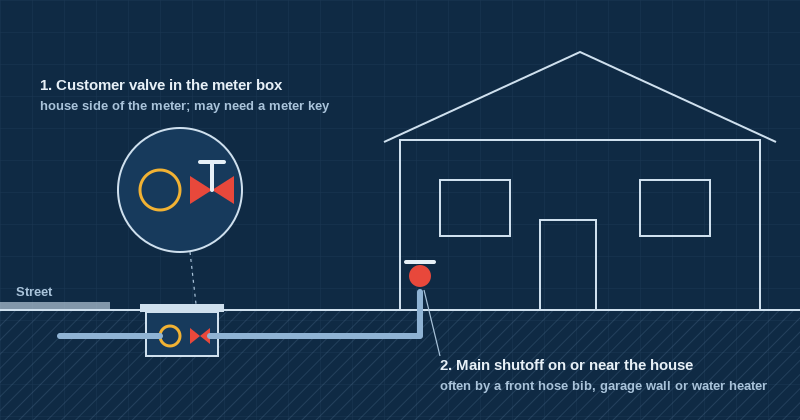
- Shut off the water. Use the main shutoff on the house, often near a front hose bib, the garage or the water heater. If you can’t find it or it won’t close, use the customer-side valve in the meter box, which may need a meter key or wrench.
- Stay away from water near electricity. Don’t touch outlets, panels or appliances while standing in water. If water is near the electrical panel, keep clear and contact your electric provider.
- Relieve the pressure. Open a faucet on the lowest floor to drain water out of the lines.
- Deal with the water heater if it’s leaking or if the water will be off for a while. Turn off its power or set the gas control to off or pilot, following the label on the heater.
- Protect what you can. Move valuables, electronics and furniture out of the water. Put containers under drips.
- Document everything. Take photos and video of the damage before and during cleanup and keep receipts.
- Call your insurer to report the claim.
The Texas Department of Insurance advises turning off the water at the main and moving valuable items off the floor when you have a leak, and notes that insurers can deny claims if you don’t take steps to protect your property. Read more in its guidance on burst pipes and water damage.
What emergency leak detection covers
Some emergencies have an obvious source: a split pipe under a sink or a burst line in the attic. Others don’t. Water coming through a ceiling, up through a floor or into the yard may be fed by a leak somewhere else. Emergency leak detection means finding that source quickly so the repair targets the right spot and the water can be turned back on.
Signs a leak is an emergency
- Water is flowing, spraying or pouring, not just dripping.
- A ceiling is sagging or bulging.
- Water is near outlets, the electrical panel or appliances.
- The meter is spinning fast with everything off.
- Water is coming up through a floor or bubbling up in the yard.
- A pipe froze and you now see or hear water after the thaw.
Common causes of sudden leaks
- Freezing. In February 2021, Winter Storm Uri led to more than 450,000 insurance claims in Texas, and the Texas Department of Insurance noted that much of the damage came from broken pipes.
- Failed supply hoses on washers, toilets, sinks and ice makers.
- Water heater failures, especially tanks in attics or closets.
- Corroded pipes and fittings that finally give way.
- Pressure surges when water service is restored after an outage.
How the source is found
Once the water is off, a provider can work methodically: pressure-testing sections of the system, checking the meter, using thermal imaging and moisture readings to follow water inside walls and ceilings, and using acoustic or tracer gas methods for leaks under slabs or in buried lines.
What happens during an emergency visit
Tell the provider what happened, where the water appeared and what you’ve already shut off. They’ll want access to the main shutoff, the meter, the water heater and the damaged areas. With the water off, they may restore pressure in stages to see which section leaks.
What happens after
After the source is located, it’s repaired by the provider or a plumber, and water service is restored. Wet materials need drying, and water damage restoration may be a separate service. Keep all invoices and photos for your insurance claim.
Why acting fast matters
Water spreads quickly through flooring, drywall and insulation. The sooner the water is shut off and the source is found, the less material gets soaked and the lower the risk of mold.
What emergency service may cost
Emergency and after-hours visits are often priced higher than scheduled ones. Ask about the emergency rate and what the visit includes when you’re connected. Each provider sets its own pricing and availability.
When to call
Call right after the water is off and everyone is safe. If you can’t shut off the water, say so right away when you’re connected.
Frequently asked questions
Where is my main water shutoff?
Commonly near a front hose bib, in the garage, near the water heater or where the line enters the house. There’s usually also a customer-side valve in the meter box near the street.
What if the main shutoff won’t close?
Use the valve in the meter box on the house side of the meter. If you can’t close that either, contact your water provider.
Should I turn off the electricity?
Only if you can reach the breaker without standing in water. If water is near the panel, stay away and call your electric provider.
Does insurance cover burst pipes?
Many homeowners policies cover sudden water damage from broken pipes, but not flooding from outside, which needs separate flood coverage. Check your policy and report claims promptly.
What should I do after a hard freeze?
Keep an eye on the meter as things thaw. A meter moving with everything off means a pipe likely split. Shut off the water and call.
Is emergency leak detection available at night?
Availability depends on the providers serving your area. Call to find out what’s available for your address.
Where emergency water leak detection comes up most in Texas
These city pages explain why emergency water leak detection matters locally, from soil and housing age to how water is supplied. Open a region to see its cities, or browse every service area.
West Texas and the Panhandle (5)
- El Paso, TXHard freezes, like the one in February 2011, have burst pipes across the city.
- Lubbock, TXHard High Plains freezes burst exposed pipes, hose bibs and cooler lines.
- Amarillo, TXAmarillo sees more hard freezes than any other big Texas city, and frozen pipes are a regular winter call.
- Big Spring, TXHard West Texas freezes burst exposed lines in older homes.
- Plainview, TXHigh Plains freezes burst exposed pipes in older homes.