The short answer
Leaks in Longview are found by confirming water loss at the meter, then testing the part of the system where the leak is likely: under the slab, beneath a pier-and-beam floor, in the walls or along the buried service line. Locally, two things matter most: East Texas soils that are sandy on top and clay below, which let leak water drain away unseen, and under-floor plumbing that’s exposed in hard freezes.
Leak problems Longview property owners run into
Longview sits mainly in Gregg County and reaches into Harrison County, in what the U.S. Geological Survey describes as the timber and oil belt of northeast Texas. Federal soil surveys for this part of the state describe sandy or loamy surface soils with clay increasing with depth.
That combination produces a recognizable set of leak problems:
- Leaks that don’t surface. Water from a buried or under-slab leak can soak down through sandy topsoil instead of pooling. A dry yard doesn’t rule out a leak; the meter is the better guide.
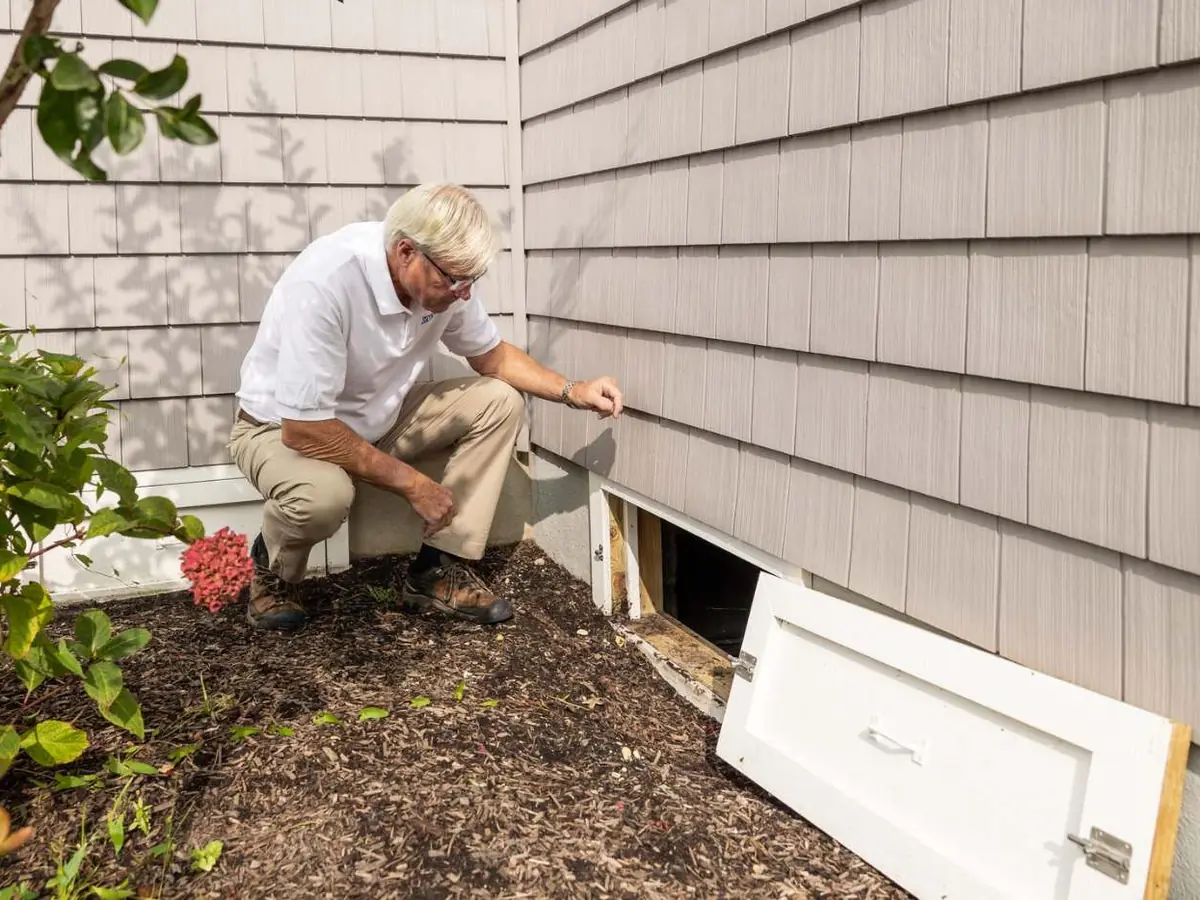
- Under-floor plumbing. Pier-and-beam construction was common in Texas homes built before about the 1960s, and Longview has its share of older houses with supply lines hanging beneath the floor. Those lines are easy to reach but exposed to cold air.
- Freeze damage. Hard freezes are rare but serious. In February 2021, Winter Storm Uri caused more than 450,000 insurance claims across Texas, with much of the damage from broken pipes, according to the Texas Department of Insurance. Lines in crawlspaces, exterior walls and attics are the most exposed.
- Two foundation types, two approaches. Detection under a slab relies on listening and gas from the floor surface. Detection under a pier-and-beam house starts with a look at the pipes themselves. Knowing which you have saves time.
Signs of a water leak in a Longview home
- The meter moves with every fixture and the irrigation off.
- A musty smell near floor vents, or soft spots in a pier-and-beam floor.
- Standing water or mud under the house when it hasn’t rained.
- A warm spot on a tile floor in a slab home.
- A bill that rose after a cold snap and hasn’t come back down.
- Stains on ceilings below bathrooms or near exterior walls.
- Lower pressure throughout the house.
Leak detection services
These statewide guides explain how each kind of leak is found. The Longview pages further down add local detail.
- Slab Leak DetectionLocating supply-line leaks under a concrete foundation before anyone breaks the floor.
- Water Meter Leak DetectionUsing the meter to confirm a leak and narrow down where the water is going, including high-bill investigations.
- Water Service Line Leak DetectionFinding leaks on the buried pipe between the water meter and the house.
- Underground Leak DetectionTracing and pinpointing leaks on buried lines across a property: yard lines, irrigation mains and lines to outbuildings.
- Ceiling and Wall Leak DetectionTracking water stains and damp drywall back to the pipe, fixture or drain that is feeding them.
- Crawlspace Leak DetectionFinding leaks in the plumbing that runs beneath pier-and-beam homes.
- Commercial Leak DetectionLeak investigations for businesses, multifamily buildings and managed properties.
How leak detection works in Longview
- Meter test with all fixtures and irrigation off.
- Foundation check. Crawlspace vents, a hatch and skirting mean pier and beam. Floors at grade with no crawlspace mean a slab.
- Isolation. The house shutoff, hot side and cold side are tested separately.
- Pinpointing. Under a slab: listening equipment, thermal imaging or tracer gas from the floor. Under a pier-and-beam floor: inspection from the crawlspace, moisture readings and direct listening on the pipe.
- Repair plan based on what was found and how the line can be reached.
Want a professional to look at it? Call to request leak detection help in Longview and talk through what you're seeing.
Call 1-866-297-0573Service coverage around Longview
Calls are connected to local leak detection specialists serving Longview addresses, including the Greggton area in ZIP 75605. Nearby communities in the Longview area include:
- Kilgore
- Gladewater
- Hallsville
If you’re in a nearby community, call and ask whether a provider covers your address.
Longview ZIP codes
These are the standard delivery ZIP codes for Longview addresses.
- 75601
- 75602
- 75603
- 75604
- 75605
PO Box ZIP codes 75606, 75607, 75608 and 75615 also belong to Longview but have no street addresses, so they aren’t service locations on their own.
Specialized leak detection pages for Longview
- Crawlspace Leak Detection in LongviewUnder-floor plumbing, freeze damage and what to check after a cold snap.
- Slab Leak Detection in LongviewLeaks that drain away unseen, and how slab leaks are pinpointed in East Texas soil.
Nearby cities with their own pages:
- Water leak detection in Tyler, TXSmith County seat, the Rose Capital. Red sandy clay hills, pines and older brick-street neighborhoods.
- Water leak detection in Marshall, TXHarrison County seat, near Caddo Lake. Most homes built before 1980, many on piers, in one of the wetter parts of Texas.
- Water leak detection in Nacogdoches, TXNacogdoches County seat, home to Stephen F. Austin State University. Historic brick streets, rentals and older homes on red clay hills.
- All East Texas citiesEvery city in this region with its own page.
Longview leak detection FAQ
How do I know if my Longview house is slab or pier and beam?
Look at the base of the exterior walls. Vents, a crawlspace hatch or skirting around the bottom mean pier and beam. A concrete edge at ground level with no crawlspace means a slab.
My yard is dry. Could I still have an underground leak?
Yes. Sandy East Texas topsoil can let water drain away before it surfaces. Check the meter with the house shut off.
Should I check for leaks after a freeze?
Yes. Watch the meter as things thaw. A meter moving with everything off after a hard freeze usually means a line split.
Who handles leaks at the meter in Longview?
Contact the water provider on your bill about the meter and anything on the street side. Leaks from the meter to the house are usually the owner’s responsibility.
Do providers here work under pier-and-beam houses?
Many do. Crawlspace access, height and standing water all affect the visit, so mention them when you call.
Sources for the local details on this page
- Longview, TX ZIP code list and ZIP types
- ZIP 75605 details including the Greggton alias (zip-codes.com)
- ZIP codes in the Longview, TX metro area
- USDA NRCS ecological site, Western Coastal Plain (East Texas soils)
- Ground-water resources of Gregg County, USGS Water-Supply Paper 1079-B
- Winter Storm Uri insurance losses and burst pipes (Texas Department of Insurance)
ZIP codes, nearby communities and soil notes come from the public sources above. Utility policies change, so confirm anything about billing or responsibility with your own water provider.