The short answer
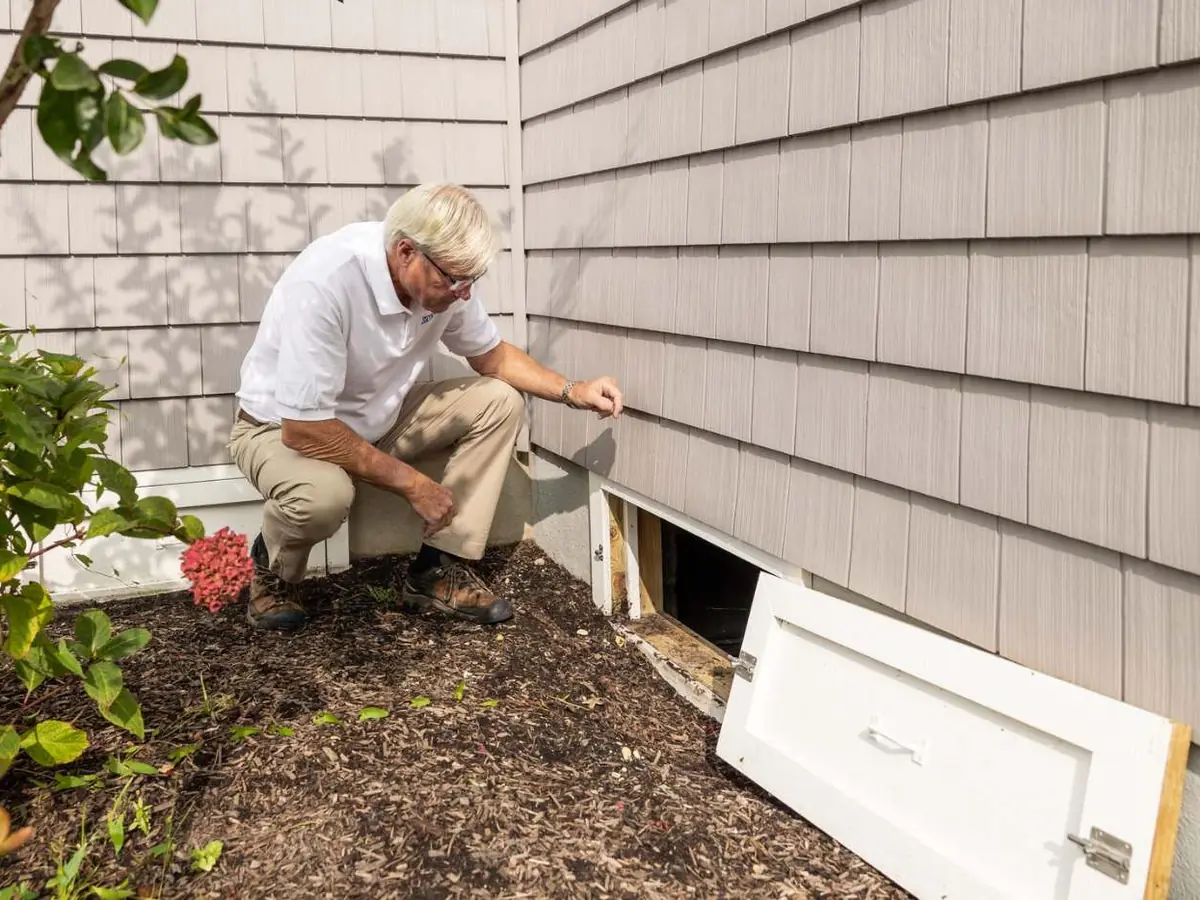
Crawlspace leak detection in Lufkin finds leaks in the plumbing under pier-and-beam floors and separates them from the other sources of moisture common in humid East Texas: condensation on cold pipes and ducts, rainwater and poor drainage. A provider uses the meter, a look at the lines from the crawlspace, moisture readings and water checks to identify a plumbing leak and pinpoint it.
Signs of a crawlspace leak in Lufkin
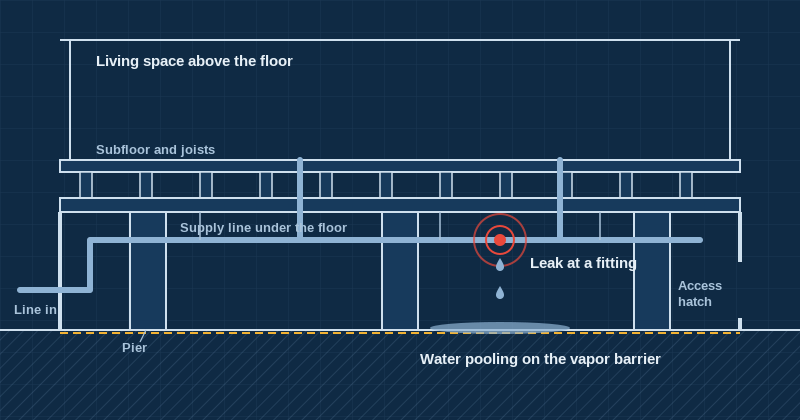
- Standing water or wet soil in one spot under the house, not spread evenly.
- Water under the house that doesn’t rise and fall with rain.
- A meter that moves with everything off.
- A musty smell stronger near one floor vent or room.
- A soft or sagging floor in a single area.
- Dripping or running water sounds from under the floor.
- Wet insulation hanging from one section of the subfloor.
Why diagnosis comes first in Lufkin
In a humid Piney Woods summer, a crawlspace can get damp without a single leaking pipe. Getting the cause right avoids paying for the wrong repair.
Condensation. When warm, humid air reaches cold water lines and air conditioning ducts, moisture condenses on them and drips. It’s typically spread along the lines rather than concentrated at one spot, and it’s worse in summer.
Rain and drainage. Gutters, downspouts and grading can send rainwater under the house. Water from this source rises and falls with the weather and often enters from one side.
Ground moisture. Federal soil surveys describe East Texas soils as sandy or loamy at the surface with clay deeper down. Where the clay layer is close to the surface, water can perch on it and seep into low crawlspaces after wet spells.
Plumbing. A supply leak runs constantly, is usually concentrated near one fitting or section of pipe, and moves the meter when everything is off. A drain leak shows up after fixtures are used.
Some providers also test standing water for chlorine. Treated city water usually carries a disinfectant, while rain and groundwater generally don’t.
Common causes of plumbing leaks under Lufkin homes
- Failed fittings, valves and old repair couplings.
- Corroded galvanized steel or older copper in older homes.
- Lines split in rare hard freezes, especially near foundation vents.
- Lines strained as piers settle or framing shifts.
- Supply connections to tubs, toilets and sinks through the floor.
- Drain leaks from tubs and showers, which appear after use.
How crawlspace leaks are found
- Meter test to confirm a supply leak.
- Visual inspection along the lines from the access hatch.
- Moisture readings on joists, subfloor and soil to find the wettest point.
- Pattern checks to see whether moisture follows the pipe route, the duct route or the downhill side of the house.
- Pressure isolation of hot, cold and branch lines.
- Direct listening on the pipe where access is tight.
- Water checks such as chlorine testing on standing water.
What the inspection involves
Clear access to the crawlspace hatch, the meter and the water heater. Tell the provider when you first noticed the moisture and whether it changes with rain, AC use or showers. Leave the crawl itself to the provider; standing water, wiring, pests and debris make it hazardous. Expect them to note insulation, vapor barrier, vents and drainage as well as the pipes.
What happens after detection
A plumbing leak under the floor is usually repaired from below. Wet insulation should be removed and replaced once the area dries. If the moisture turns out to be condensation, insulating cold lines and ducts and managing crawlspace humidity are typical fixes. If it’s drainage, a drainage or foundation contractor is the right next call.
When to call
Call right away if water is pouring under the house or a floor is sagging. Shut off the main first if a supply line is the likely source. Book a visit if the meter moves with everything off, or if wet soil under the house stays in one spot regardless of the weather.
Frequently asked questions
How do I know if it’s condensation or a leak?
Condensation is spread along cold pipes or ducts and worse in summer. A leak is concentrated near one spot and moves the meter with everything off.
Water under my house dries up between rains. Is that a leak?
Probably not a supply leak, since those run constantly. Look at gutters, downspouts and grading first.
Can a provider tell if the water is city water?
Some test standing water for chlorine. Treated city water usually contains it; rain and groundwater generally don’t.
Will they need to go under the house?
Usually, yes, at least to inspect and test. Most repairs are also made from below.
Should I encapsulate my crawlspace?
That’s a separate decision. Find and fix any plumbing leak first so it isn’t hidden under new material.
More leak detection in Lufkin
- Water leak detection in LufkinThe Lufkin overview: local leak patterns, coverage and ZIP codes.
- Underground Leak Detection in LufkinSandy soil, long rural lines and roots: tracing and pinpointing buried leaks.
- How crawlspace leak detection worksThe full statewide guide: methods, costs and what to expect anywhere in Texas.
- Slab Leak DetectionLocating supply-line leaks under a concrete foundation before anyone breaks the floor.
- Water Service Line Leak DetectionFinding leaks on the buried pipe between the water meter and the house.
Sources for the local details on this page
- Lufkin, TX ZIP code list and ZIP types
- ZIP 75904 details: land area and counties (zip-codes.com)
- Angelina County ZIP codes and towns
- Angelina County map notes: towns, Sam Rayburn Reservoir, rivers
- USDA NRCS ecological site, Western Coastal Plain (East Texas soils)
ZIP codes, nearby communities and soil notes come from the public sources above. Utility policies change, so confirm anything about billing or responsibility with your own water provider.