The short answer
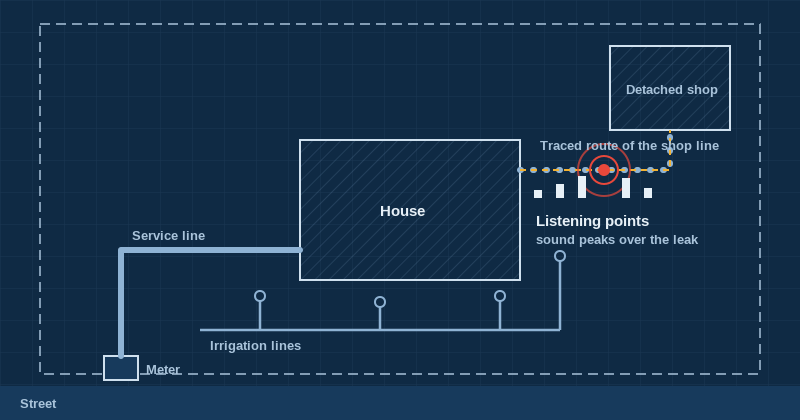
Underground leak detection in Lufkin locates leaks in buried lines: the service line, lines to shops and barns, hydrants and irrigation mains. Because sandy East Texas soil absorbs leak water readily, a leak often shows only on the meter. A provider isolates each line to find the leaking one, traces its route, then pinpoints the leak by listening along it or using tracer gas.
Signs of an underground leak in Lufkin
- The meter moves with the house and every other line shut off at its valve.
- A bill that rose with no visible water anywhere.
- Lower pressure at a shop, barn or hydrant.
- A patch of grass or brush that stays green in dry weather.
- Soil settling or a soft spot along a likely line route.
- Water in a valve box or meter box in a dry week.
In Lufkin’s sandy soil, the absence of a wet spot doesn’t mean much. The meter is the more reliable sign.
What’s different about underground leaks in Lufkin
Sandy soil hides leaks. Federal soil surveys describe the Pineywoods’ surface soils as sandy or loamy, absorbing water readily, with clay increasing slowly with depth. A buried leak can drain into that soil for a long time without surfacing. Sometimes the first visible sign is settling, as escaping water carries sand away from around the pipe.
Big ZIP, long lines. ZIP 75904 covers about 160 square miles and extends into Trinity County. Outside town, the meter can sit far from the house, and many properties have additional lines to shops, barns, livestock troughs and hydrants. More buried pipe means more places for a leak, and often more uncertainty about where the lines run.
Roots and trees. Wooded lots are part of the appeal of the area. Pressurized water lines aren’t usually invaded by roots the way sewer lines are, but large roots can lift, crush, shift or rub against a shallow line as they grow.
Lines added over the years. Lines to outbuildings are often added after the house, sometimes shallower, sometimes in different materials, with splices where they were extended. Those splices and older couplings are common leak points.
Common causes
- Old couplings, splices and repair fittings.
- Shallow lines damaged by vehicles, tractors or trailers.
- Root growth shifting or abrading lines.
- Freeze damage at hydrants, risers and shallow sections.
- Corroded galvanized steel on older lines.
- Damage from fence posts and digging, since private lines aren’t marked by 811.
How underground leaks are found
- Line-by-line isolation. Each line is closed at its valve while the meter is watched. The one that stops it is the leaking line.
- Line tracing. Metal pipe is traced electronically. Plastic pipe is traced with a tracer wire if present, or with a signal or transmitter sent through the line.
- Acoustic listening along the traced route. Sandy soil and plastic pipe can both weaken the sound, so readings are taken at close spacing.
- Tracer gas. The line is drained and filled with a harmless gas that rises through sandy soil readily at the leak, which makes it a strong option here.
- Surface checks such as settling, vegetation and soil moisture to confirm the location.
What the inspection involves
Before the visit, list every buried line you know about and where its valves are, even if you’re unsure. Unlock gates and outbuildings, and know where the meter is if it’s far from the house. On larger properties, the provider may begin with a walk of the site to find valve boxes, risers and hydrants before testing.
What happens after detection
The leak point is marked and the line route is often flagged or painted, which is worth recording for the future. Repair is usually a small excavation at the marked spot. If a line has leaked more than once, runs shallow under a driveway, or is old galvanized steel, replacing it may be recommended. Before digging, public utilities should be marked through Texas811; your private lines won’t be.
When to call
Call when the meter shows a leak and the house itself checks out, or when pressure drops at an outbuilding or hydrant. Call right away if water is bubbling up, the ground is washing out, or the meter is spinning.
Frequently asked questions
Why can’t I see any water if there’s a leak?
Sandy soil absorbs water quickly, so a buried leak can drain away without surfacing. The meter is the best indicator.
Nobody knows where my line to the barn runs. Can it still be found?
Yes. The route is traced first, then the leak is pinpointed along it.
Will 811 mark my water lines?
No. Texas811 coordinates marking of public utilities. Lines you own aren’t marked.
Do tree roots damage water lines?
They can shift, crush or rub against shallow lines, though they rarely grow into pressurized pipe.
Should I replace an old line instead of repairing it?
If it has failed more than once or is corroded galvanized steel, replacement is often worth considering.
More leak detection in Lufkin
- Water leak detection in LufkinThe Lufkin overview: local leak patterns, coverage and ZIP codes.
- Crawlspace Leak Detection in LufkinTelling plumbing leaks apart from humidity, condensation and drainage under the house.
- How underground leak detection worksThe full statewide guide: methods, costs and what to expect anywhere in Texas.
- Water Service Line Leak DetectionFinding leaks on the buried pipe between the water meter and the house.
- Water Meter Leak DetectionUsing the meter to confirm a leak and narrow down where the water is going, including high-bill investigations.
Sources for the local details on this page
- Lufkin, TX ZIP code list and ZIP types
- ZIP 75904 details: land area and counties (zip-codes.com)
- Angelina County ZIP codes and towns
- Angelina County map notes: towns, Sam Rayburn Reservoir, rivers
- USDA NRCS ecological site, Western Coastal Plain (East Texas soils)
ZIP codes, nearby communities and soil notes come from the public sources above. Utility policies change, so confirm anything about billing or responsibility with your own water provider.