The short answer
Ceiling and wall leak detection in Victoria traces water damage back to its source. After storms that’s especially important, because wind-driven rain, roof damage, attic AC condensate overflow and plumbing leaks can all stain the same ceiling. A provider uses the meter, the timing of the damage, moisture mapping, thermal imaging and fixture testing to identify the source before anything is opened.
Signs of a hidden wall or ceiling leak in Victoria
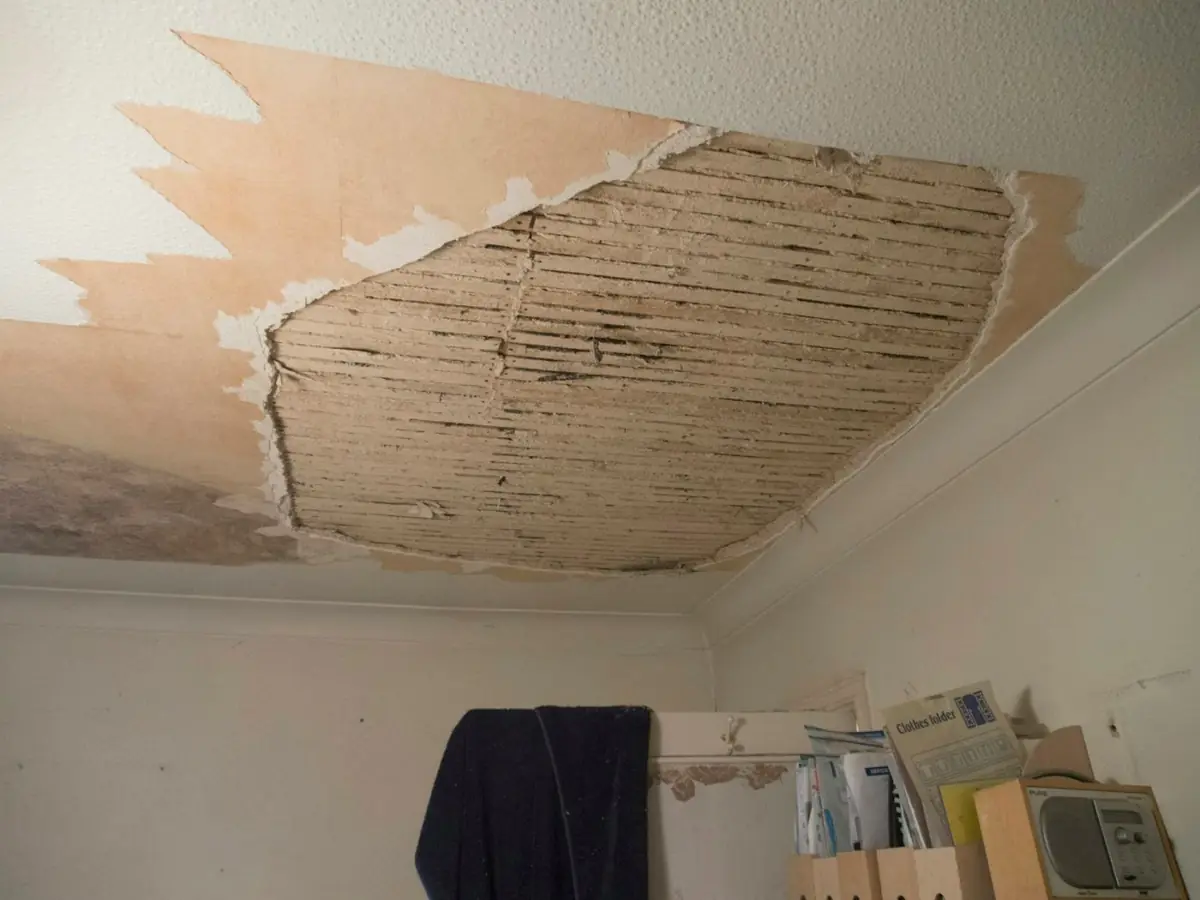
- A ceiling stain that keeps growing on dry days.
- A stain below a bathroom, the attic air handler or a water heater closet.
- Bubbling paint or soft drywall on an interior wall.
- Swollen baseboards or trim near a bathroom or kitchen.
- Drips from a light fixture or ceiling vent.
- A musty smell that returns after the room has been aired out.
- Damage that worsens after showers or laundry rather than after rain.
Why the source matters more in Victoria
Victoria has seen serious hurricane damage. Hurricane Harvey in 2017 was the city’s largest natural disaster since Hurricane Carla in 1961, and storms like it bring wind-driven rain that can get past roofing, flashing, windows and vents. That means a ceiling stain here has more plausible causes than it might elsewhere.
Roof and envelope leaks show up during or soon after rain, and are often near exterior walls, chimneys, vents or roof valleys.
Attic AC condensate overflow is common in humid Gulf Coast summers, when air conditioners run long hours and pull a lot of moisture out of the air. A clogged condensate line or a rusted drain pan can soak the ceiling below the air handler on a perfectly dry day.
Plumbing leaks run constantly if they’re on a supply line, or only when a fixture is used if they’re on a drain. They don’t care about the weather.
Flood water and storm leaks are treated differently by insurance. Standard homeowners policies generally cover sudden leaks inside the home, but not flooding from outside. Getting the source right helps with the claim as well as the repair.
Common causes
- Supply line pinholes and failed fittings in walls and ceilings.
- Shower valves, tub overflows and failed shower pans.
- Toilet supply hoses and wax rings on upper floors.
- Clogged AC condensate lines and rusted attic drain pans.
- Attic water heater leaks or relief valve discharge.
- Wind-driven rain past roofing, flashing, windows or vents.
- Lines in exterior walls damaged by a rare hard freeze.
How the source is found
- Timing. When did it start, and does it change with rain, AC use, showers or laundry?
- Meter test. A moving meter with everything off means a supply line is involved.
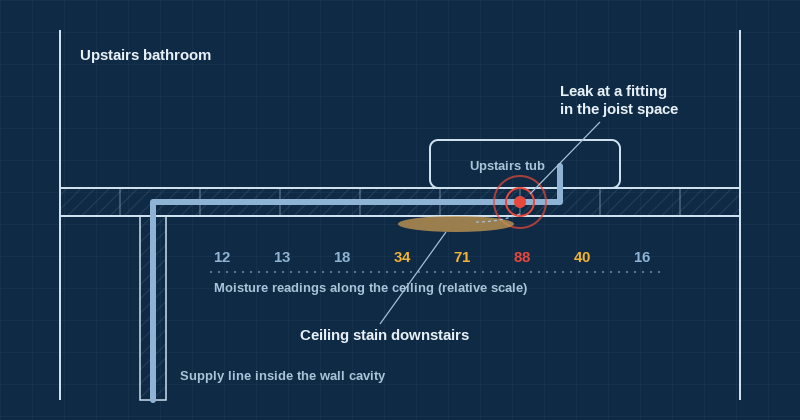
- Moisture mapping. Readings in a grid across the ceiling and walls show where the water is coming from and how it spread.
- Thermal imaging to see wet areas and hot water lines through the surface.
- Fixture isolation. Running one fixture at a time and watching for new moisture.
- Attic check of the air handler, condensate line, drain pan, water heater and the underside of the roof deck.
- Borescope through a small hole when the inside of a cavity needs to be seen.
What the inspection involves
The provider will need access to the stained room, the room or bathroom above it, and the attic. Tell them when the stain appeared, whether it changed with rain, and whether there was storm damage or an outage recently. Photos taken over time help show how the stain grew.
What happens after the source is found
The fix depends on the source: a plumber for supply or drain lines, an HVAC technician for the condensate system, a roofer for roof or flashing damage. Wet drywall and insulation should be dried or replaced, and any mold dealt with before walls and ceilings are closed. Keep photos and invoices for insurance.
When to call
Call right away if a ceiling is sagging, water is dripping from a light fixture, or water is near electrical outlets. Shut off the water if a supply line is the likely source. Book a visit if a stain keeps growing between rains or returns after drying.
Frequently asked questions
How do I tell a roof leak from a plumbing leak in Victoria?
Note when the stain changes. Growth only during rain points to the roof. Growth on dry days points to plumbing or the attic AC. A meter test shows whether a supply line is involved.
My stain is right under the air handler. What should I check?
The condensate line and drain pan. A clogged line or rusted pan can overflow onto the ceiling, especially in summer.
Will my insurer care what caused the stain?
Yes. Sudden plumbing leaks and storm damage are often covered differently from flood water or long-term leaks. Document the damage and ask your insurer.
Do they have to cut open the ceiling?
Often not to find the source. Moisture mapping and thermal imaging work through the surface. Wet or moldy drywall usually needs replacing afterward.
Can a ceiling leak and a slab leak happen at the same time?
Yes, though it’s uncommon. Meter readings and pressure tests separate the two.
More leak detection in Victoria
- Water leak detection in VictoriaThe Victoria overview: local leak patterns, coverage and ZIP codes.
- Slab Leak Detection in VictoriaCoastal clay, post-storm checks and how slab leaks are located from the floor.
- How ceiling and wall leak detection worksThe full statewide guide: methods, costs and what to expect anywhere in Texas.
- Emergency Water Leak DetectionWhat to do in the first few minutes of an active leak, and how to get the source found.
- Water Leak DetectionThe starting point when you know water is going somewhere it shouldn’t but don’t know where.
Sources for the local details on this page
- Victoria, TX ZIP code list and ZIP types
- ZIP 77904 details: land area (zip-codes.com)
- ZIP codes of Victoria County (nearby communities)
- Victoria soil series, USDA official series description
- Victoria council review of Hurricane Harvey and the water system (Victoria Advocate via GovTech)
- Victoria boil-water order after Harvey (KSAT)
ZIP codes, nearby communities and soil notes come from the public sources above. Utility policies change, so confirm anything about billing or responsibility with your own water provider.