The short answer
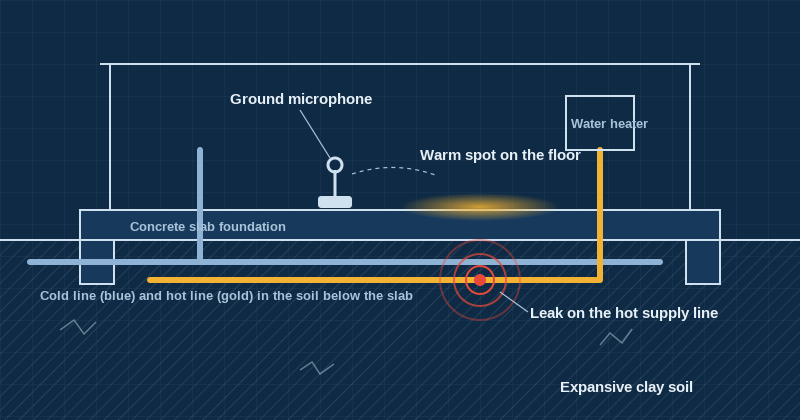
A slab leak in Temple is a leak in a water line beneath the concrete foundation, set in clay that swells when wet. A provider confirms water loss at the meter, pressure-tests the hot and cold lines to find the leaking one, and pinpoints the spot from the floor with listening equipment, thermal imaging or tracer gas. Finding it early matters because a steady leak keeps part of the clay under the slab wet while the rest dries.
Signs of a slab leak in Temple
- A tile floor that’s warm in one place, day and night.
- The water heater running more, or hot water running out sooner.
- The sound of water under the floor with everything off.
- A higher bill with no change in use.
- Damp flooring or baseboards away from any fixture.
- Floor cracks, sticking doors or a raised area that appear together with any of the signs above.
In Temple, homeowners often notice the floor before the bill. Cracks and uneven floors are common on expansive clay with or without a leak, so treat them as a reason to check the meter, not as proof.
What’s different about slab leaks in Temple
Temple sits on the Blackland Prairie side of Bell County, where the Handbook of Texas lists Houston Black clay as the most common soil. The Texas Water Development Board describes Houston Black as a classic shrink-swell soil: it expands when wet and shrinks and cracks when dry.
That has three consequences under a slab:
- A leak can change the soil it sits in. Water from a slab leak keeps the clay around it wet while the soil under the rest of the house follows the weather. Uneven moisture means uneven movement. Engineers and foundation contractors look for plumbing leaks for exactly this reason.
- Movement stresses the lines. Year after year of swelling and shrinking works on fittings and on the points where pipes rise through the slab. These are common leak spots in Temple homes.
- Foundation repair and plumbing go together. Raising or leveling a slab can strain the lines beneath it. Many homeowners have the plumbing pressure-tested after foundation work, and some foundation contractors recommend a test before work starts so a pre-existing leak isn’t blamed on the repair.
Dense clay also carries sound differently from sand or gravel fill, and the bedding around pipes under a slab is often looser than the native clay. Providers listen along the pipe route rather than assuming the leak sits under the wettest spot.
Common causes
- Soil movement working on fittings and rise points.
- Hot line abrasion from expansion and contraction against concrete and fill.
- Corrosion and pinholes in older copper lines.
- Lines damaged during construction or later foundation work.
- Older pipe materials with known failure histories, including polybutylene.
How slab leaks are pinpointed in Temple
- Meter check with all fixtures and irrigation off.
- Hot and cold isolation with pressure gauges to find the leaking side.
- Line tracing to map the leaking line under the slab.
- Acoustic listening along the traced route.
- Thermal imaging on hot-side leaks to show the warm plume.
- Tracer gas for quiet leaks or plastic pipe.
If foundation work is planned, it helps to share any engineer’s report with the provider. Floor elevation readings can help explain where water has been collecting.
What the inspection involves
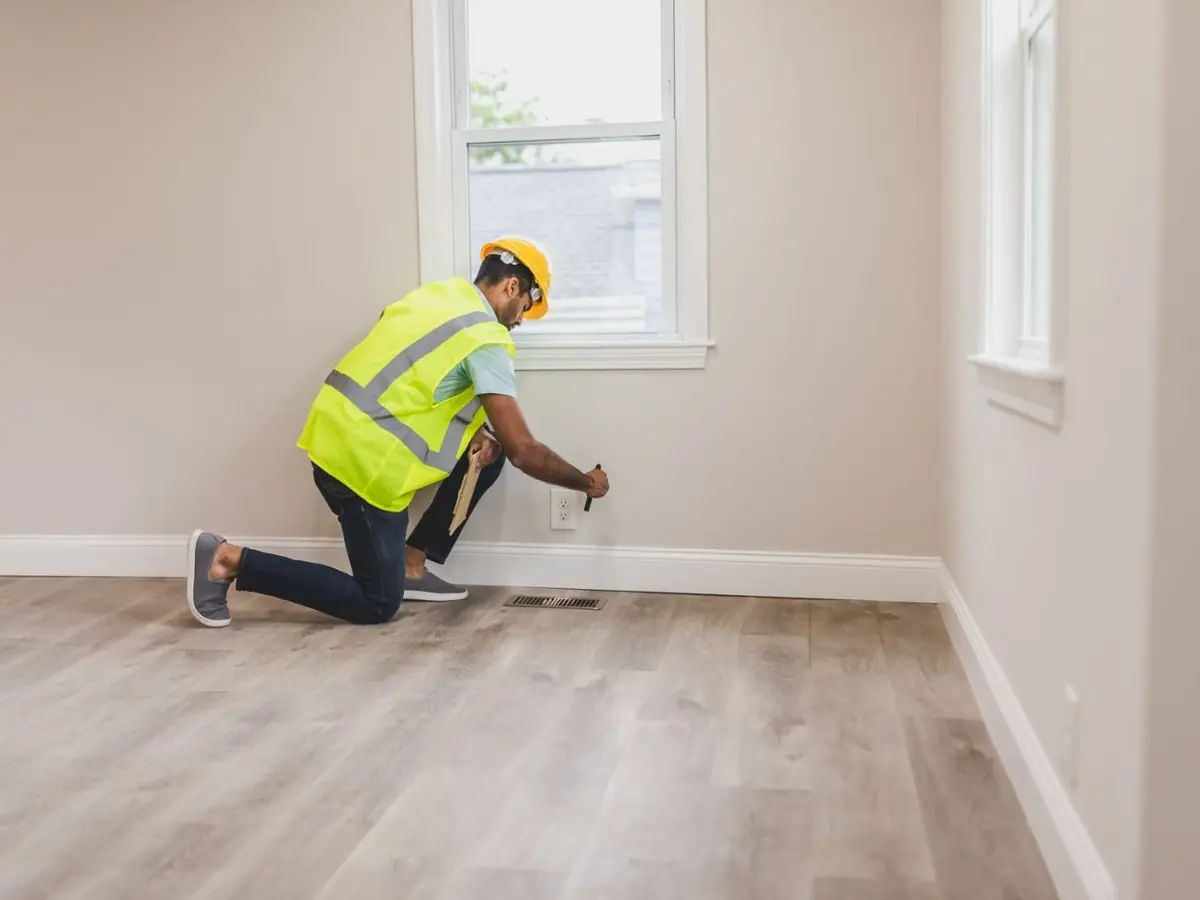
The provider starts at the meter, then the water heater and the main shutoff. Expect them to walk the floor with listening equipment and mark tape where the sound peaks. Clear floors over warm or damp areas and give access to every bathroom and the kitchen. Tell them about recent or planned foundation work.
What happens after detection
Options usually include a spot repair at the marked location, a reroute that runs a new line through walls or the attic and abandons the section under the slab, or a broader repipe after repeated leaks. On expansive clay, some homeowners prefer rerouting so future soil movement can’t affect that line again. Ask the provider or plumber to explain the trade-offs for your house.
After the repair, ask whether a follow-up pressure test is included, and keep the paperwork with your foundation records.
When to call
Call when floor changes appear alongside a higher bill or a busy water heater, or whenever the meter moves with everything off. Shut off the water and call right away if water is coming up through the floor.
Frequently asked questions
Can a slab leak cause foundation movement in Temple?
A steady leak keeps part of the clay under the slab wet, which can contribute to uneven movement. That’s a big reason to find slab leaks early on expansive soil.
My foundation is moving. Do I have a slab leak?
Not necessarily. Houston Black clay moves on its own with the seasons. A meter test tells you whether a leak is also involved.
Should I test my plumbing before foundation repair?
Many homeowners test before and after. A test before shows whether a leak already exists; a test after confirms the lines weren’t damaged by lifting.
Is rerouting better than a spot repair here?
Not always. A single leak on sound pipe is often spot repaired. Repeated leaks, or lines in an area that keeps moving, are common reasons to reroute.
How long does it take?
A single leak in a typical home often takes one to a few hours to locate. Multiple leaks or quiet plastic lines can take longer.
More leak detection in Temple
- Water leak detection in TempleThe Temple overview: local leak patterns, coverage and ZIP codes.
- Water Service Line Leak Detection in TempleClay that cracks and swells, flooded meter boxes and how buried lines are traced.
- How slab leak detection worksThe full statewide guide: methods, costs and what to expect anywhere in Texas.
- Water Meter Leak DetectionUsing the meter to confirm a leak and narrow down where the water is going, including high-bill investigations.
- Water Service Line Leak DetectionFinding leaks on the buried pipe between the water meter and the house.
Sources for the local details on this page
- Temple, TX ZIP code list and ZIP types
- Bell County ZIP codes (nearby communities)
- Bell County, Handbook of Texas (via TAMUCT library)
- Houston Black, the Texas state soil (Texas Water Development Board)
ZIP codes, nearby communities and soil notes come from the public sources above. Utility policies change, so confirm anything about billing or responsibility with your own water provider.